

In Spain, police records (antecedentes policiales) can create real obstacles in everyday life and in high-stakes applications—especially for foreign nationals. These records may appear after an arrest, an investigation, an identification, or a police report, even if you were never convicted or your case was dismissed. Many people only discover the issue when they face an immigration refusal, a background check problem, or a request for “clean records.”
This page explains—in plain English—how police record cancellation in Spain works, what documents you need, typical timelines, and what to do if your request is delayed or denied. It also clarifies the most common confusion in Spain: police records vs criminal records. If you are unsure which one you have, we guide you through a simple decision path and offer a lawyer-led service to handle the process end-to-end.
Fast Answer: Can Police Records Be Canceled in Spain?
In many cases, yes. Spanish data-protection rules recognize the right to request the deletion/suppression of personal data held in police databases when keeping the record is no longer justified. English searches often use terms like “expunge police record Spain” or “delete police record Spain”; in Spain, the concept is commonly handled as cancellation/suppression of police records (depending on the police force and the database).
When cancellation/suppression is usually possible (common scenarios)
- Arrested but not charged (no prosecution followed).
- Case dismissed / archived by the court (investigation closed).
- Acquitted (found not guilty).
- Convicted in the past but you have already completed the sentence and criminal records have been canceled (police record cancellation may follow, depending on the force and record type).
- Records that are outdated and no longer justified to keep (case-specific and proof-driven).
When it may be refused or delayed (what to know upfront)
Requests can be refused or delayed if the administration considers the data is still necessary for legitimate law-enforcement purposes (for example, if there is an ongoing investigation, unresolved proceedings, or incomplete documentation). Some cases are also delayed because the authority requests additional proof (finality of the court decision, identity verification, or clarification of which record you want removed). This is why an evidence-led submission and structured follow-up are critical.
Police Records vs Criminal Records in Spain (Most Common Confusion)
Most English-speaking clients search for “criminal record expungement Spain” when what they actually need is police record cancellation—or vice versa. These are different records, managed by different authorities, and they follow different legal logic. Getting this wrong can waste months and lead to preventable refusals in immigration or work procedures.
What are antecedentes policiales (police records)?
Police records are data entries created by law enforcement during prevention and investigation activity—such as identification, arrest, reports, or investigations. They can exist even without a conviction. They are typically held in police databases (such as the National Police PERPOL file, and analogous files for other forces) and are mainly for internal law-enforcement use, but can still cause indirect problems in administrative contexts.
What are antecedentes penales (criminal records)?
Criminal records are linked to judicial convictions and are generally managed through the Ministry of Justice’s registries. They are not the same as police records. Many administrative processes—such as employment screening or certain immigration filings—focus primarily on criminal records, but police records can still trigger additional scrutiny or procedural friction depending on the context.
Do I need to cancel both?
Sometimes, yes. A common pathway is: if there was a conviction, you may need to cancel criminal records first (antecedentes penales), and then request police record cancellation (antecedentes policiales) with the police force that holds the record. If there was no conviction (dismissal, archive, acquittal), the route is usually focused directly on police records, supported by proof of the judicial outcome and its finality.
Having No Police Records Is Important for Several Reasons

Canceling police records can remove avoidable obstacles in sensitive procedures—especially immigration, nationality, and background checks. Even when the underlying case ended years ago, lingering police records can trigger extra scrutiny, delays, or requests for clarification. For many clients, the goal is not only legal correctness, but also peace of mind and a clean administrative pathway.
Because each law enforcement agency manages its own file, a clean strategy requires identifying which police force holds the record, choosing the correct legal route (cancellation vs rectification), and submitting the right proof in the right format. That is exactly what we do as part of our service.
Do Police Records Affect My Immigration Procedures?
Police records can affect immigration procedures in Spain—especially if the authority interprets them as a risk indicator or if your application triggers additional checks. For residence permits, renewals, long-term residence, visas, and Spanish nationality, a clean record profile helps reduce the chance of delays, requests for extra documents, and refusals. If you are planning an application, it is often safer to assess and address police records before filing—so you do not discover the problem mid-procedure.
That said, immigration outcomes depend on the full facts and the specific procedure. We do not promise results; instead, we focus on making sure your cancellation request is correctly prepared, supported, and followed up—so your immigration file is not weakened by avoidable administrative friction.
Types of Police Records in Spain
Police records in Spain can be held by different law enforcement agencies. The practical consequence is simple: you usually must request cancellation with the same force that generated or holds the record, following its specific process and evidence standards.
- National Police records: Often linked to the PERPOL file (police-interest records) and created through National Police interventions or investigations.
- Civil Guard records: Stored in Civil Guard data files (commonly referenced as INTPOL/police-interest records for that force) for individuals investigated or involved in Civil Guard reports.
- Autonomous/Regional police records: Regional forces (such as Mossos d’Esquadra, Ertzaintza, Policía Foral) can maintain their own databases and procedures, which may have administrative particularities.
A correct strategy starts by identifying where the record sits, whether it is a police record or a criminal record, and what proof is needed (dismissal/acquittal/penalty completion). From there, we prepare a targeted request and follow the case until there is a clear outcome.
How Lexmovea Can Help with the Cancellation of Police Records
At Lexmovea, we provide an English-speaking, lawyer-led service to cancel police records in Spain while also helping clients who are actually searching for criminal record cancellation/expungement but need clarity on the right process. We combine legal accuracy with practical execution—so you know exactly what is happening at each step.
- Eligibility and strategy review: We confirm what kind of record you have (police vs criminal), identify the authority, and decide whether the correct route is cancellation, rectification (error correction), or a combined plan.
- Document review and preparation: We prepare a complete file with identity documents, judicial outcome proof, finality certificates where needed, and a structured legal request that matches the authority’s expectations.
- Submission and representation: Where permitted, we submit on your behalf (or guide you through online/in-person submission if you prefer), including authorization requirements when a representative acts for you.
- Follow-up and troubleshooting: We track deadlines, respond to requests for additional information, and advise on next steps if the administration does not respond or issues a denial.
With Lexmovea, you get a clear, end-to-end plan to clean your record profile and reduce avoidable issues in immigration procedures, employment screening, and administrative filings.
Step-by-Step: How the Police Record Cancellation Process Works
Competitors often describe the concept but skip execution. Below is the practical workflow we use so you understand what happens, what you must provide, and how delays are handled.
Step 1 — Identify the record type and the correct authority
First, we confirm whether you are dealing with police records (antecedentes policiales) or criminal records (antecedentes penales). Then we identify the police force that holds the record (National Police, Civil Guard, or regional police). This step prevents the most common mistake: submitting the right request to the wrong authority.
Step 2 — Choose the right route: cancellation vs rectification (error correction)
If the record is wrong (incorrect identity data, wrong outcome, duplicate entries, incomplete archive information), the correct approach may be rectification rather than cancellation. If the record is accurate but no longer justified to keep, the route is usually cancellation/suppression. We choose the path that aligns with your facts and the authority’s requirements.
Step 3 — Build the evidence file (what proves your situation)
Police record cancellation is proof-driven. The authority needs documentation showing why the data should be deleted, such as judicial outcomes (acquittal, dismissal/archiving), proof of finality, or confirmation that a penalty was completed and criminal records were canceled where necessary.
Step 4 — Submit through the appropriate channel and track the response
Submission routes depend on the police force and your situation (in Spain vs abroad, digital certificate/Cl@ve availability, representation). After submission, we track the case, respond to information requests, and advise on next steps if the authority does not respond within the stated timeframe or issues a denial.
Documents Checklist (What You’ll Typically Need)
This checklist covers the core document categories for a strong cancellation request. Requirements can vary by police force and case type, but these are the most common items used to support police record clearance Spain requests.
Identity documents (DNI / NIE / passport)
- Spanish DNI (if you are a Spanish citizen), or
- NIE/TIE (if you are a foreign resident), and/or
- Passport (especially important for non-residents or applying from abroad).
Case outcome proof (dismissal, archiving, acquittal, completion)
- Court order of dismissal/archiving (auto de archivo/sobreseimiento), and proof it is final if required.
- Acquittal judgment (sentencia absolutoria) and proof of finality when applicable.
- Proof of sentence completion or administrative resolution showing compliance, when relevant.
- Criminal record cancellation proof (when a conviction exists and the police force requires criminal records to be canceled first).
Authorization if we act for you (representation)
If a request is submitted by someone other than the data subject, authorities may require a specific authorization or power of attorney. We prepare the correct representation document for your case and ensure the request includes all mandatory identity and notification details.
Canceling Police Records with the National Police

National Police records are commonly linked to the PERPOL file. While record deletion may be expected after certain periods, in practice many people only see progress once they submit a formal request. The request can often be filed electronically (if you have a digital certificate/Cl@ve, where applicable) or in person through official channels such as Police Stations and public registries recognized under administrative procedure rules.
The key is not only “where to submit,” but how: identifying the specific data to be removed, attaching the correct supporting documents, and making sure the legal request matches the authority’s standards so it does not stall for avoidable reasons.
Applicable Regulations for Cancelling Police Records with the National Police
Spanish constitutional and data-protection rules recognize the right to personal data protection. In this area, Organic Law 7/2021 and related rules establish safeguards for personal data processed for the prevention, detection, investigation, and prosecution of criminal offenses. These rules provide the legal basis for requesting deletion/suppression of data when it is no longer justified to keep the record, and they set procedural duties for the administration when handling requests.
Because the process is legal-and-evidence driven, we focus on building a complete file that shows why the record should be removed, what record is being requested, and how identity and finality are proven.
Request for the Cancellation of Police Records with the National Police
If the request is submitted by a representative rather than the data subject, authorities can require a specific authorization or power of attorney. We prepare the representation document, confirm identity compliance, and ensure the request contains complete details for notifications and follow-up.
In a well-prepared request, you typically specify the data to be deleted and attach supporting documentation, such as:
- Judicial certificates or certified copies proving the final outcome (acquittal, dismissal/archiving) and, when necessary, proof that the decision is final.
- Administrative certificates or certified copies showing penalty completion, fine payment, or extinction of responsibility where relevant.
- Authorizations that allow retrieval of related certificates where required for the case strategy (when applicable).
Requests are usually subject to a stated response timeframe. If the administration does not respond within the legally applicable period, the request may be treated as denied for procedural purposes—meaning it becomes crucial to know what follow-up or appeal options are available in your case.
How to Know if My Police Records Have Been Removed from the National Police File?
In practice, successful cancellation usually depends on the underlying case outcome and documentation quality. Two common pathways are:
- Acquittal or dismissal/archiving: Provide the certified judicial document plus proof of finality where required. If the decision is still under appeal, cancellation is typically not granted.
- Conviction in the past: In many cases, criminal records must be canceled first, and then you request police record cancellation supported by the Ministry of Justice cancellation proof (case- and force-dependent).
Cancelling Police Records with the Civil Guard
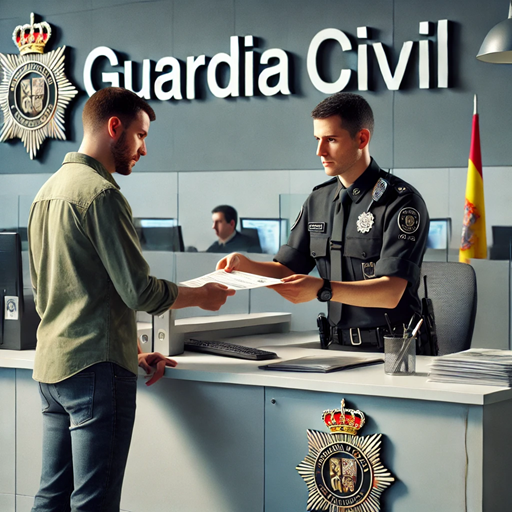
To cancel police records with the Civil Guard, you generally submit a formal request with identification and supporting documentation through the available official channels (central office and/or electronic headquarters, depending on the procedure). In a request for cancellation of police records with the Civil Guard, it is essential to identify which records you want removed, complete the official form correctly, and attach proof showing the outcome of the related case.
Generation of Police Records by the Civil Guard
When a Civil Guard intervention results in a report, investigation, or criminal procedure, data can be recorded in Civil Guard systems. This means that later interactions with the authorities can reflect that historical entry, even if the final judicial outcome was favorable. This is one reason many clients seek police record clearance Spain proactively.
Police Records Even After Acquittal
Even if you were acquitted or the case was archived, police records may still exist in a police database because the record reflects the intervention/investigation history, not only convictions. That is why the cancellation request must be backed by the judicial resolution and, where required, proof that the resolution is final.
Nature of Police Records
Police records are personal data recorded in law enforcement systems under the legal regime for data processed for prevention and investigation purposes. These records are not “criminal records,” and they can persist unless a cancellation/suppression request is correctly filed and supported.
Procedure for Cancelling Police Records with the Civil Guard
In many conviction-related cases, a practical requirement is to cancel criminal records first, then request Civil Guard police record cancellation using the Ministry of Justice proof (where applicable). For non-conviction outcomes (dismissal, archive, acquittal), the request typically focuses on judicial outcome proof and finality.
Documentation Required for Cancellation with the Civil Guard
If you were acquitted or the case was archived, provide the relevant judicial documentation and, crucially, proof of finality if required. The administration may refuse cancellation if the decision is still subject to appeal or if the documentation does not clearly prove the case outcome.
Submitting the Cancellation Request
Under Spanish administrative procedure rules, requests can often be submitted through recognized official channels (including certain public registries and other administrative offices). The key is to submit through a valid channel and keep proof of submission so you can track the timeline and enforce follow-up steps if the administration does not respond.
Contents of the Request
The request should be signed by the individual, include complete identification details, an address for notifications, and a clear description of which records are to be removed. A vague request without record identification and supporting proof is one of the most common reasons for delay.
Civil Guard Response Time
Authorities typically state a maximum response period (often referenced as one month in many procedures). If no response is received within the applicable period, the request may be treated as denied for procedural purposes—meaning you may need to escalate through formal review routes depending on the case.
Appeals in Case of Denial of the Police Record Cancellation Request
If the request is denied, it may be possible to request review through the data-protection channels available, including escalation routes involving the relevant Data Protection Officer and, where appropriate, the Spanish Data Protection Agency. The correct route depends on the authority’s response and the procedural posture, so legal guidance can prevent wasted time and ensure your next step is properly framed.
Cancelling Police Records with Other Regional Police Forces
Beyond the National Police and Civil Guard, regional police forces (for example, Mossos d’Esquadra, Ertzaintza, Policía Foral) may keep their own records. If you had an incident in a region with its own police force, you may have records in that system even if you do not see the issue elsewhere.
This matters for background checks, permits, and administrative filings. The cancellation approach is similar in principle—identify the record, prove the outcome, submit through the correct channel—but each force may have its own forms and practical requirements.
How to Cancel Records with Regional Police Forces?
Regional police cancellation requests are typically built around the same pillars: correct identification, correct form, and strong supporting documentation. In most cases, the process involves:
- Requesting cancellation: Submit a formal request to the competent regional authority or registry channel used by that police force.
- Justification: Attach judicial documentation proving the case outcome (dismissal/archiving, acquittal) or proof of sentence completion where applicable.
- Timeframes and follow-up: Timelines and practical requirements vary. Keeping proof of submission and managing follow-up are essential to avoid silent denials and procedural dead-ends.
Why is the Cancellation of Police Records Important?
Canceling police records helps you avoid past incidents affecting your present. It can remove obstacles in employment screening, streamline administrative processes, reduce avoidable immigration delays, and give you clarity and peace of mind. For many clients, the value is not only legal—it’s practical.
Model for Cancelling Police Records

To begin the process of cancel police records Spain, you typically need the appropriate request form for the relevant police force. Many authorities provide models online. The key is not only downloading a template, but completing it correctly and attaching the exact evidence that fits your scenario (acquitted, archived, convicted but criminal records canceled, error correction, etc.).
Below is a practical guide to forms and why they matter:
- Model for Cancelling Police Records: Police records can be canceled by submitting the relevant request forms to the competent police force. Use the correct model for the specific authority holding your record.
- National Police: Use the National Police cancellation/suppression request route and ensure you identify the data and attach judicial outcome proof.
- Civil Guard: Use the Civil Guard’s form/route for cancellation requests and include evidence that matches your case outcome and any required prior steps (such as criminal record cancellation where applicable).
- Mossos d’Esquadra: If your incident occurred in Catalonia, the competent authority may require a regional procedure and supporting judicial documentation.
- Policía Foral de Navarra: Navarra maintains its own processes; submit through the designated registry channels with complete evidence.
- Other Regional Police Forces: Each force can have its own form and submission channel. When in doubt, we identify the correct authority, prepare the correct form, and file with proof of submission.
Forms are only a starting point. What determines success is the supporting evidence, the finality proof (when required), and correct submission and follow-up. That is where lawyer-led preparation makes the difference.
Frequently Asked Questions about Canceling Police Records in Spain
- What is the difference between police records and criminal records in Spain? Police records (antecedentes policiales) are data entries created by law enforcement during investigations or interventions and can exist even without a conviction. Criminal records (antecedentes penales) are linked to judicial convictions and are typically managed through Ministry of Justice registries.
- What are police records? Police records are entries created by law enforcement agencies during crime prevention and investigation activity. They are distinct from criminal records, which result from judicial convictions.
- How do I cancel a police record in Spain? You must submit a cancellation/suppression request to the police force that holds the record (National Police, Civil Guard, or regional police), identifying the data and attaching supporting documentation (for example, dismissal/archiving, acquittal, or prior criminal record cancellation proof where applicable).
- What documents are needed to cancel police records in Spain? Typically: identity documents (DNI/NIE/passport) and judicial/administrative documentation proving the case outcome and, when required, proof of finality. If a representative submits the request, an authorization or power of attorney may be required.
- Can foreigners cancel police or criminal records in Spain? In many cases, yes. Foreign nationals can request cancellation, including while living abroad, but identity documentation and representation requirements may differ. A structured workflow helps ensure the correct authority and evidence are used from the start.
- How can I check if I have police records? Verification can require submitting a request to the competent authority responsible for the police record file or working with a lawyer to identify which force holds the record based on the incident history and documentation.
- How long do police records last? Some procedures reference maximum retention periods, but in practice records may persist unless a formal cancellation/suppression request is filed and supported. If you need certainty for immigration or work, a proactive request is often advisable.
- Do police records get erased automatically? Not reliably in practice. Many clients only see progress once they submit a formal request with complete documentation proving the case outcome and, when needed, finality.
- Will canceling/expunging my record remove it from background checks in Spain? Cancellation/suppression can improve your administrative profile, but outcomes depend on what database is being checked and what type of record you had. We explain realistic expectations and what proof or confirmation you can request after the process.
- Can I cancel police records online? In some cases, yes—depending on the police force and whether you can use digital identity tools (digital certificate/Cl@ve) and the authority’s electronic submission channels. Where online filing is not practical, in-person or registry submission routes may apply.
- How can I cancel police records in person at the National Police? You can submit the request and supporting documents through official channels such as Police Stations and other recognized public registries. Keeping stamped proof of submission is essential for tracking and follow-up.
- How to cancel police records by mail at the National Police? If using postal submission, follow the official address and procedure and keep a stamped/recorded copy for proof. A lawyer can ensure the file is complete so the request does not stall due to missing proof or identification issues.
- How to remove police records online / How to delete police records? English queries often say “remove/delete/expunge.” In Spain, you typically request cancellation/suppression through the competent authority’s channel, attaching judicial outcome proof and identity documents, and using digital tools where available.
- How can I request the cancellation of police records with Mossos d’Esquadra? If the record is held by a regional police force, you submit a formal request to the competent regional authority/registry with your identity documents and judicial proof of the case outcome. Requirements and channels can vary by region.
- Where can I download my police record online? Police records are not typically issued as a standard “downloadable certificate” for public use. What matters is the cancellation/suppression request and the outcome confirmation from the authority once resolved.
- What is PERPOL? PERPOL is a National Police database that records information about individuals of police interest based on investigations, reports, or interventions, even if there is no conviction. It is distinct from criminal records.