

If you are searching in English for “civil partnership Spain”, “domestic partnership Spain”, or “civil union Spain”, you are almost certainly looking for the Spanish legal concept called pareja de hecho. This page is a practical, step-by-step guide to help you apply/register a civil partnership (pareja de hecho) in Spain with clarity, confidence, and a clear “what to do next” roadmap—especially if one or both partners are foreigners and you need to handle apostille, sworn translations (traducción jurada), document validity windows, appointment booking (cita previa), and region-specific rules.
This service is built around execution: where you register, how the process works step by step, what documents you must prepare (and how), what varies by Autonomous Community, and how civil partnership registration can support Spanish residency in the right scenario. If you want professional help, we can confirm your local registry requirements, prepare your file, and guide you through appointment day and the next immigration steps.
What is a Civil Partnership in Spain?
A civil partnership in Spain—commonly referred to by English speakers as a civil union or domestic partnership—is typically registered as a pareja de hecho. It is a legal recognition of a stable relationship between two people who live together (or can prove a stable relationship under local rules). It is not the same as marriage, and the exact rights and registration requirements can differ significantly depending on where in Spain you register.
For many couples, the primary goal is practical: obtaining a pareja de hecho registration certificate that can be used for administrative processes (housing, local procedures, benefits depending on region), and—when applicable—supporting an immigration pathway (for example, a non-EU partner applying as the family member of an EU/Spanish citizen). The key is doing it correctly: the process is often fast when planned well, but can be delayed or denied when documents are incomplete, outdated, not properly legalized, or not aligned with the registry’s regional criteria.
What you can achieve by registering a civil partnership in Spain
- Legal recognition of your partnership under the registry or notarial route used in your region.
- Official registration certificate (proof of union) for administrative procedures.
- Immigration planning: in the right scenario, registration can support a residence application for the non-EU partner (after careful review of eligibility and documentation).
- Clearer proof of relationship for certain public or private processes (varies by context and region).
Civil partnership vs marriage in Spain (quick decision guide)
Many couples compare civil partnership registration Spain with marriage because both can support administrative and immigration goals. However, they are different in legal effects, default economic rules, and certain long-term rights. Civil partnership is often quicker to register and dissolve (depending on route), but marriage typically provides a more unified legal framework nationwide. Your best option depends on your priorities: speed, documentation, immigration strategy, and the region where you live.
Benefits of Registering a Civil Partnership in Spain
Beyond the personal and legal recognition of your relationship, registering a pareja de hecho can deliver practical advantages. For many couples, the process can be quicker than marriage and allows more flexibility regarding economic arrangements (often through an optional agreement). In immigration contexts, registration may be used as part of a pathway for a non-EU citizen to request a residence permit linked to an EU or Spanish partner, subject to eligibility and the specific requirements of the competent immigration office.
Can a civil partnership help me get Spanish residency?
This is one of the highest-intent questions: “Can a civil partnership help me get residency in Spain?” In many cases, registering a civil partnership (pareja de hecho) with a Spanish or EU citizen can be used to support a residence application for the non-EU partner, but it is not “automatic.” Immigration outcomes depend on the partner’s EU/Spanish status, proof of the relationship, cohabitation evidence, and meeting additional conditions such as health coverage and sufficient means (where required). Strategy matters: the residency file must match your real circumstances and comply with the legal framework.
Below is a summary of the requirements often needed to process residency through a civil partnership (your exact requirements may vary depending on your situation and the competent office):
- Full health coverage, either through Social Security if employed or with private health insurance.
- Proof of legal union with a Spanish or EU citizen, by presenting the civil partnership registration certificate.
- Sufficient financial means, amounting to €627.13 per month or €8,779.82 per year. This can be demonstrated with a work contract or bank account funds.
Important: civil partnership registration is the starting point, not the finish line. The best results come from planning the civil partnership application and the immigration application as a coordinated strategy: correct region, correct documents, correct proof, and correct timing.
Who can apply (eligibility checklist)
Eligibility is not “one national rule” across Spain. Most Autonomous Communities share core principles, but the proof required and the procedure can differ. Before you book an appointment, you should confirm three things: (1) your civil status eligibility, (2) your cohabitation / padrón evidence, and (3) the registry’s local rules (which may be stricter than expected).
Spanish / EU / non-EU couples (what typically changes)
Foreigners can often register a civil partnership in Spain, but the administrative burden is usually higher when one or both partners are non-EU. The main differences are practical: foreign documents (birth, single status, divorce) often require apostille or legalization, must be within a validity window, and must be translated via sworn translation (traducción jurada) when the registry requires Spanish documentation.
Cohabitation & padrón basics (what “proof” usually means)
Many registries require proof that you live together, usually demonstrated through joint registration at the same address (padrón). Some regions require a minimum cohabitation period (for example, 1–2 years), while others accept joint registration without a minimum time if other requirements are met. Cohabitation proof is one of the most common causes of delay—so we recommend planning your padrón and evidence early.
Common reasons for refusal (and how we prevent them)
- Incorrect registry route (booking in the wrong municipality/registry or not meeting local competence rules).
- Outdated civil status documents (single-status certificates often have short validity windows).
- Missing apostille/legalization or using a document that is not accepted in Spain in its current form.
- Non-sworn translations when sworn translations are required.
- Cohabitation proof mismatch (padrón dates, inconsistent addresses, lack of acceptable alternatives).
- “Convenience partnership” suspicion due to weak evidence, contradictions, or incomplete file preparation.
Requirements for Registering a Civil Partnership in Spain

It is important to note that the requirements for registering a civil partnership may vary by Autonomous Community. In some regions, a minimum cohabitation period of 1 or 2 years is required; in others, simply being jointly registered at the same address is sufficient.
This regional variation is the single biggest pain point for English-speaking couples trying to apply/register pareja de hecho in Spain. “Spain” is not one registry system for civil partnerships: competence can sit with a regional registry, a municipal registry, or a notarial route depending on your location and facts. The right approach starts with confirming which authority applies to your address and which documentary standards they enforce.
General Requirements:
- Both partners must be single and not married to third parties.
- Both must be of legal age.
- They must be registered as living together at the same address.
- Provide valid identification documents (DNI or passport).
- If a minimum cohabitation period is required, evidence must be provided.
- In many Autonomous Communities, the civil partnership registration can still be completed even if one partner is undocumented.
Where to apply in Spain (registry vs town hall vs notary)
A core question is: “Where do you register a civil partnership in Spain—town hall or registry?” The practical answer is: it depends on your Autonomous Community and the mechanism it uses. Some couples register through a regional registry of stable partnerships, others through local administrative channels, and in many scenarios a notary can be an efficient route. The crucial point is not the label, but competence: you must file in the correct authority for your address and scenario.
How registration works in Spain (regional competence explained simply)
Spain’s civil partnership system is decentralized. This means that requirements like cohabitation duration, witness rules, appointment steps, accepted civil status certificates, and local forms can differ. Many delays happen because couples prepare documents for “Spain” in general, but the registry expects specific formats for the exact municipality/registry.
Region-by-region snapshot (Madrid / Barcelona-Catalonia / Valencia / Andalusia)
Below is a high-level snapshot of what typically varies by region. This is not a substitute for confirming your exact registry rules; it is designed to help you understand why a “one-size-fits-all” checklist online often fails.
- Madrid: requirements often emphasize correct registry competence, cohabitation proof through padrón, and documentary validity for civil status evidence. Appointment availability can be a major timeline driver.
- Catalonia (Barcelona): process can be document-sensitive and may apply its own standards for cohabitation proof and civil status documentation—planning apostille/translation timing is especially important.
- Valencia: registry competence and accepted proofs can vary by municipality; confirming local forms and witness requirements early can prevent failed appointments.
- Andalusia: requirements can differ across provinces/municipalities; cohabitation proof, appointment steps, and documentary formality must match the registry used.
Process for Registering a Civil Partnership
This is the execution-focused section: how to apply for a civil partnership in Spain step by step. Your process typically follows a consistent sequence: (1) confirm the correct authority, (2) prepare documents (especially foreign documents), (3) secure the appointment (cita previa), (4) attend appointment with required parties/witnesses, (5) obtain the certificate, and (6) plan next steps (including immigration, if relevant).
Civil partnerships must be registered with the Registry of Stable Unmarried Partnerships in the corresponding Autonomous Community. There are two ways to register:
- Through a Notary:
This option is fast and generally does not require a minimum cohabitation period. An appointment must be scheduled, and both partners must express their intent to form a civil partnership through a notarial act or deed. - Registry in the Autonomous Community:
Registering directly with the regional registry may require a minimum cohabitation period and joint registration at the same address. The presence of two witnesses is also required.
Step-by-step application process (what we do with you)
Step 1 — Case assessment & region check
We start by confirming your address/registry competence and identifying the correct route (registry vs notary). This prevents the most common failure: preparing the right documents for the wrong authority. We also flag risk factors (civil status complexity, prior registrations, document recency, cohabitation proof gaps).
Step 2 — Document list + apostille/translation plan (for foreigners)
Foreign couples often lose weeks because they handle documents in the wrong order. We prepare a document plan that considers: (1) which documents need apostille vs legalization, (2) which must be sworn translated into Spanish, (3) how recent each document must be, and (4) how to align all documents with the registry’s appointment date.
Step 3 — Appointment (cita previa) booking support
Appointment availability is often the main timeline bottleneck. We guide you on what information the registry requires to book correctly and what to prepare so the appointment does not fail (missing witness, missing form, outdated civil status document, wrong address proof).
Step 4 — Appointment day mini-guide (attendance, witnesses, interpreter)
On the day, registries may require both partners to attend, and some routes require witnesses. If one partner does not speak Spanish, an interpreter may be necessary depending on the authority and procedure. The goal is simple: a complete, consistent file so the registry can register your union without deferrals.
Step 5 — Registration + obtaining the certificate
After registration, the output you need is the official pareja de hecho registration certificate. This is the document typically used for administrative and immigration steps. Always keep a clean copy and verify that names, ID numbers, and dates match your passports and official IDs.
After registration, the official certificate is sent to the couple’s address within approximately 7 days.
Step 6 — Next steps (residency route guidance where applicable)
If your objective includes immigration, the next steps must be planned carefully. The registration certificate is usually a core piece of evidence, but you may also need health coverage, proof of means, and other documentation depending on the residence route and your specific profile. Our team can advise you on the safest sequence to avoid gaps and delays.
Required Documentation for Civil Partnerships in Spain

Searchers often ask: “What documents do I need to register a civil partnership in Spain?” The exact list depends on your region and whether either partner is foreign. Below is a strong baseline checklist that we refine once we confirm your registry and circumstances.
Documents Required to Register a Civil Partnership
- Identification Documents: Passport, NIE, or DNI of both parties.
- Birth Certificate: Literal copy for both partners.
- Certificate of Civil Status: Confirming that both are single or divorced.
- Divorce or Annulment Decree: If either partner was previously married.
- Family Book: If the couple has children together.
- Joint Certificate of Residence: Confirming cohabitation.
- Completed Registration Form.
- Economic Agreement (optional): If the couple wishes to establish financial arrangements.
Foreign documents: apostille/legalization + sworn translation
Foreign documents must be valid and acceptable in Spain. In many cases that means apostille (or legalization, depending on the issuing country) and sworn translation into Spanish (traducción jurada). The biggest mistake we see is waiting until the last moment: apostille and sworn translations can take time, and registry appointments may be lost if documents are not ready.
Note: Foreign documents must be apostilled and translated into Spanish to be valid in Spain.
Document validity windows (how recent documents must be)
Many registries require civil status certificates and similar documents to be issued within a certain recency window (often 3–6 months, depending on the authority). This is why planning is critical: if you obtain a certificate too early, it may expire before your appointment; too late, and you may miss your booking window.
Proof of cohabitation (examples + alternatives)
Proof of cohabitation is often satisfied through joint padrón registration, but some registries accept additional evidence (or require more) depending on their rules. Examples may include joint lease, joint bills, shared bank evidence, or other proofs—always subject to what your registry accepts. The safest approach is to prepare the strongest cohabitation package available to you and align it with the registry’s written requirements.
Can the Registration of a Civil Partnership Be Denied?
Yes. Registration can be denied if requirements are not met or if the registry considers the file incomplete or inconsistent. Denials are often preventable through careful preparation, correct regional routing, and strong documentary alignment.
- Unemancipated minors: Registration is not valid for minors who are not independent of their parents or legal guardians.
- Informal separation from a previous partner: Individuals who ended their joint cohabitation with a former partner but lack a formal judicial separation cannot register a new partnership until the prior union is legally dissolved.
- Previous registration in another community or with another person: If one of the members has a registered partnership with another person or in another community, the previous registration must be canceled before entering a new one.
- Kinship up to the third degree: The partnership cannot be registered between relatives up to the third degree, such as parents, children, grandparents, grandchildren, uncles, or nephews.
- Convenience registration: If the partnership is suspected to be solely for benefits, such as residency for a foreign citizen, it may be denied as a sham partnership.
Causes of Dissolution of a Civil Partnership
A civil partnership may be dissolved for several reasons. Understanding dissolution is useful not to create anxiety, but to appreciate the flexibility and the importance of accurate registry updates if your situation changes.
- Death of one of the partners.
- Mutual agreement between both parties, notified to the registry.
- Unilateral decision by one partner, formally communicated to the registry.
- Separation for a period exceeding six months.
- Marriage of one of the partners to another person.
Timelines, fees & what affects them
Users frequently search “civil partnership Spain processing time” and “civil partnership Spain fees and costs”. In practice, the timeline is driven less by “registration processing” and more by: (1) appointment availability, (2) document readiness (apostille/translation/recency), and (3) whether your registry requires witnesses or additional steps.
Expected timeline ranges (appointments vs processing)
- Document preparation: varies widely for foreign documents (apostille + sworn translation can be the longest step).
- Appointment booking: depends on the registry/notary availability in your location.
- Certificate issuance: once registered, you typically receive the certificate shortly after (timing depends on the route and authority).
Typical cost components (what you may pay for)
- Notary fees (if you choose the notarial route).
- Sworn translations (traducción jurada) for foreign documents.
- Legalization/apostille costs (issued by the document’s country of origin).
- Legal assistance (document review, registry strategy, appointment support, file preparation).
Key Differences Between a Civil Partnership and Marriage in Spain
The main distinctions between civil partnerships and marriage in Spain lie in the level of legal protection, rights, and obligations each status entails. If you are deciding between the two, focus on: speed of registration, nationwide uniformity (marriage is more uniform), your economic arrangements, inheritance planning, and your immigration strategy.
- Ease of Registration and Dissolution: Civil partnerships are generally easier to register and dissolve, often requiring just a declaration from both parties at the civil partnership registry or before a notary. Marriage, on the other hand, requires a judicial divorce process, which can be longer and more complex.
- Legal and Property Protection: Marriage provides a more comprehensive legal framework, including automatic economic rights and duties, such as community property or separate property regimes. Civil partnerships do not have a predetermined property regime; partners must sign a specific agreement during registration if they wish to regulate joint assets.
- Inheritance Rights: In marriage, the surviving spouse automatically has inheritance rights unless a will states otherwise. In a civil partnership, the surviving partner does not have direct inheritance rights unless explicitly outlined in a will.
- Survivor’s Pension: Married spouses are entitled to a survivor’s pension regardless of how long they were married. In civil partnerships, the surviving partner must meet specific requirements, such as a minimum of 5 years of cohabitation, 2 years of registered partnership, and an income limit.
- Maintenance Obligation: After separation, married individuals can request spousal support if one partner is economically disadvantaged. In civil partnerships, maintenance obligations only apply if stipulated in an agreement signed by both parties.
- Right to Spanish Nationality: Marriage enables a non-EU citizen to acquire Spanish nationality more quickly, after one year of marriage and cohabitation with a Spanish citizen. Civil partnerships do not offer direct access to nationality but allow residency in Spain.
Application for the Community Family Residence Card por pareja de hecho
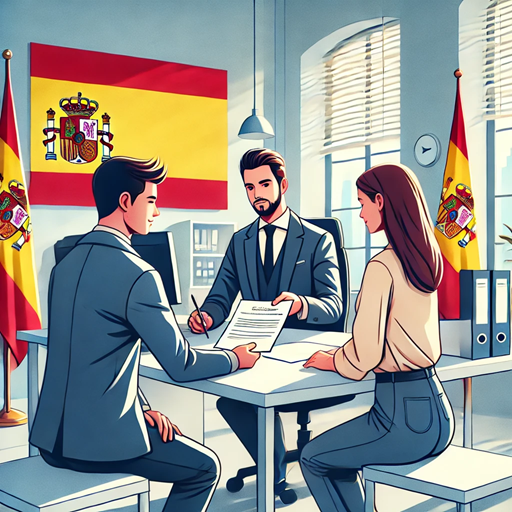
This section addresses the most conversion-intent scenario: a non-EU partner registering a civil partnership with an EU or Spanish citizen and then applying for a residence card. The strongest approach is to treat this as a coordinated plan: register civil partnership Spain first (correctly), obtain the certificate, and then prepare an immigration file that matches your circumstances and the applicable requirements.
Steps to Obtain Residency Through a Civil Partnership
Once a civil partnership is registered with a notary or the corresponding autonomous community, the non-EU citizen gains a legal bond with an EU or Spanish citizen, allowing them to apply for the community family residence card in Spain. The next step involves submitting the application at the immigration office.
Step-by-Step Process to Obtain Residency Through a Civil Partnership
1. Entering Spain
If the non-EU citizen does not require a visa to enter Spain, they can arrive as a tourist and reunite directly with their EU or Spanish partner.If a visa is required, the individual must apply for a community family visa at the Spanish consulate in their country of origin.
Required documents for the visa application:
- That you have an affective relationship with your partner in Spain.
- That the partner is a citizen of the EU.
- That there is the intention to live together in Spain.
2. Registering the Civil Partnership with a Notary
Once in Spain, the non-EU citizen has three months to formalize the civil partnership registration. If the process is delayed, the individual can remain in Spain even in irregular status while awaiting resolution.
Options for registration:
- Register the partnership in Spain or another EU country (recommended for ease of process).
- Register the partnership outside the EU, ensuring the certificate is validated in Spain.
Applying for the Community Residence Card: After registering the partnership, the non-EU citizen can apply for the residence card.
Processing Time and Next Steps
Once the application is submitted, the resolution process may take up to 3 months (or even 5–6 months in cases of delays). Upon approval, the non-EU citizen must:
- Visit the immigration office to provide fingerprints.
- Collect the residence card approximately one month later.
The residence card is valid for 5 years.
Frequently Asked Questions About Civil Partnerships in Spain
These FAQs are designed to answer the key “must-answer” queries that drive decisions: how to apply, documents, where to register, foreigners’ eligibility, and whether it supports residency. If you want us to confirm your exact regional requirements and prepare your file, we can help you move from “research” to “registered.”
- How do I apply for a civil partnership in Spain? The practical sequence is: confirm your competent registry/notary route based on your address, secure your padrón/cohabitation proof, prepare civil status documents (and apostille/sworn translations for foreign documents), book the appointment (cita previa), attend with required parties/witnesses, and obtain the official certificate. The fastest path is the one that matches your region’s rules the first time.
- What documents do I need to register a civil partnership in Spain? Most authorities request identification (passport/NIE/DNI), proof of address/cohabitation (padrón), civil status evidence (single-status/divorce), and registry forms. If you are foreign, you will often need apostille/legalization and sworn translations into Spanish, and documents must typically be recent (validity windows vary by authority).
- Where do you register a civil partnership in Spain (town hall or registry)? It depends on the Autonomous Community and local competence. Many registrations are handled by regional partnership registries, some by local administrative channels, and some can be done through a notary. Choosing the correct authority for your location is essential to avoid failed appointments.
- Can foreigners register a civil partnership in Spain? In many cases, yes. The main difference is documentary readiness: foreign civil status documents often require apostille/legalization, sworn translations, and must fall within the accepted validity window. Some registries also apply stricter cohabitation proof standards for foreign couples.
- Can a civil partnership help me get Spanish residency? In the right scenario—especially when one partner is an EU or Spanish citizen—civil partnership registration can support a residence application. However, it is not automatic: you must meet additional requirements (health coverage, means, and evidence) and the file must be consistent and complete.
- What happens if I am in irregular status? The initial deadline to complete this process is 90 days, equivalent to a tourist visa’s validity. However, delays in resolution may result in temporary irregular status. This does not affect the outcome, as submitting the application allows the process to continue.
- Can I obtain nationality through a civil partnership? While registering as a civil partner does not directly grant Spanish nationality, it facilitates the process. Residency obtained through a civil partnership reduces the waiting period for applying for nationality through residency.
- Can the registration of a civil partnership be denied? Yes, registration may be denied if either partner does not meet the age, civil status, or residency requirements, if documents are incomplete/outdated, or if the registry suspects the partnership is not genuine. Pre-checking requirements and preparing a consistent evidence file reduces risk.
- What is the economic framework for a civil partnership? A civil partnership does not automatically impose an economic framework. Partners can sign an agreement to regulate their financial relationship. This is optional and allows the couple to define mutual economic rules.
- Is there a survivor’s pension in a civil partnership? Yes, civil partners are eligible for a survivor’s pension if the partnership is duly registered and additional requirements are met, such as proving economic dependency on the deceased in recent years.
- What is required to form a civil partnership in Spain? To register a civil partnership in Spain, you must:
- Be of legal age.Be unmarried.
- Demonstrate stable cohabitation with your partner through documents such as joint registration of residence.
- Provide identification (DNI, NIE, or passport), a certificate of single status, and other documents based on the autonomous community’s requirements.
- What is a civil partnership? A civil partnership is a legally recognized union between two people who live together stably without being married. It grants rights similar to marriage, such as inheritance or residency permits, depending on the region’s laws. Formalizing the partnership requires registration and meeting specific criteria, such as proving cohabitation.