
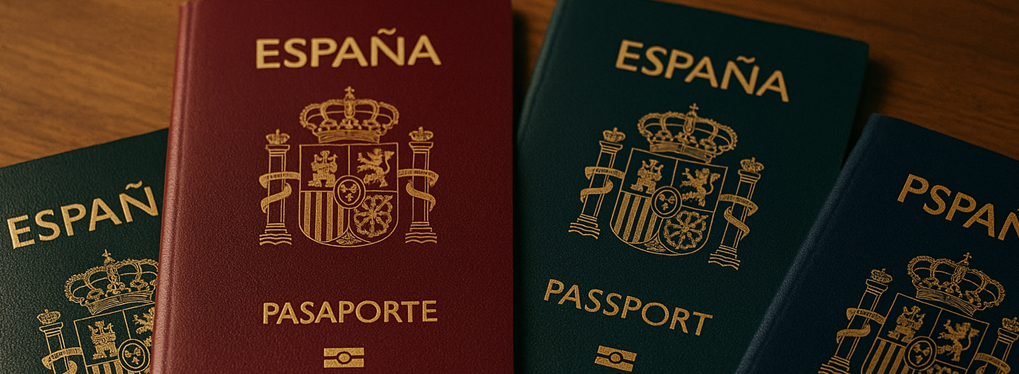
If you’re planning to come to Spain — to visit, study, work, retire, invest, or join family — the first decision is which visa fits your purpose and how long you intend to stay. This page is the overview: it explains the main visa categories, helps you find the right one for your situation, and links to our detailed guide for each. The golden rule is simple — your purpose and your length of stay decide your visa, and choosing wrong is costly to fix later.
Spanish visas are governed by the current immigration framework, including Real Decreto 1155/2024 (in force since 20 May 2025) for residence routes and the EU Schengen rules for short stays.
First: do you even need a visa?
Two groups generally don’t:
- EU, EEA, and Swiss citizens have freedom of movement — no visa to enter, live, or work. They register instead and obtain a Green NIE.
- Nationals of visa-exempt countries (the US, Canada, the UK, Australia, Japan, many Latin American countries, and others) can enter for up to 90 days in any 180 without a short-stay visa — for tourism or business only, never to work or reside. To stay longer or to work, you still need the right long-stay visa before arriving.
A frequent and expensive mistake: entering visa-free as a tourist hoping to “regularize” later. That rarely works and often creates problems. If you intend to live in Spain, plan the correct visa from your home country.
The three families of Spanish visas

- Short-stay (Schengen) visas — up to 90 days in any 180-day period, for tourism, business, or short visits. No work, no residence.
- Transit visas — to pass through Spain (most commonly an airport transit visa to stay in the international zone during a connection).
- Long-stay (national) visas — for more than 90 days, to live, study, work, retire, invest, or join family. These lead to residence and, after arrival, to a TIE card.
Most people moving to Spain need a long-stay national visa. The rest of this page focuses there, with short-stay covered briefly.
Which visa do I need? A quick guide by goal
- Visit or do business briefly → short-stay Schengen visa (or visa-free entry if your nationality qualifies).
- Study → student visa (short-term for courses under 90 days; long-term for longer programmes).
- Work remotely for a non-Spanish company → digital nomad visa.
- Live on your own means without working in Spain (retirees, passive income) → non-lucrative residence visa.
- Join family already legally in Spain → family reunification visa.
- Carry out religious activity for a registered entity → religious activities visa.
- Come to look for a job → job-seeker visa (below).
Short-stay (Schengen) visas
The short-stay or Schengen visa allows up to 90 days in any 180-day period, for tourism, family or business visits, or short courses — never paid work. Typical requirements: the completed application form, a valid passport, photos, proof of accommodation and round-trip travel, travel medical insurance with at least €30,000 cover, proof of sufficient funds (broadly €100/day, with a minimum), and the visa fee (around €80). Nationals of visa-exempt countries skip the visa for stays within the 90/180 limit.
A short-term student visa covers language courses or programmes under three months; anything longer needs the long-term student visa.
Transit visas
For passing through Spain en route elsewhere. The airport transit visa lets certain nationalities stay in the international zone during a connection without entering Spain; there are also maritime and (less commonly) territorial transit visas. Many travellers don’t need one — it depends on nationality and route.
Long-stay (national) visas — the routes to living in Spain

Non-lucrative residence visa
For non-EU nationals who want to live in Spain without working there, on passive income or savings — popular with retirees. You must show 400% of the IPREM — about €28,800 a year (€2,400/month) in 2026 — plus 100% of the IPREM (€7,200) per dependent, and full private health insurance. No work, including remote work, is allowed. Full detail on our non-lucrative residence page.
Digital nomad visa
For remote workers and freelancers employed by, or serving, companies outside Spain. You generally need income of around 200% of the SMI (roughly €2,800/month in 2026), professional experience, and an active relationship with a non-Spanish employer or clients. It can lead to residence renewable up to five years, and offers possible access to the Beckham tax regime. See our digital nomad visa page.
Work visa (employed or self-employed)
For those coming to work in Spain. The employed route generally requires a job offer from a Spanish employer, who initiates the authorization; the self-employed (autónomo) route is for those setting up their own activity, with a viable business plan and the required qualifications and investment.
Family reunification visa
Lets a legal resident bring close family — spouse or partner, minor children, dependent parents — to live with them in Spain. The resident sponsor starts the process here; once approved, the relative applies for the visa abroad. Detail on our family reunification page.
Job-seeker visa
Allows certain qualified applicants (university or vocational graduates, and some other profiles) to enter Spain for 12 months to look for work or start a venture. It doesn’t authorize work from day one — but once you secure a job offer, you can modify to a residence-and-work authorization without leaving Spain.
A note on the Golden Visa
Important update: Spain’s Golden Visa (investor residence) was abolished on 3 April 2025 by Organic Law 1/2025. The old €500,000 real-estate route is permanently closed — beware of outdated pages still advertising it. Investors and financially independent applicants now typically look to the non-lucrative residence visa or, for remote workers, the digital nomad visa instead.
Extraordinary visa
A rare category issued in exceptional situations tied to Spain’s or the EU’s foreign-policy, security, or public-health interests, with a maximum duration of one year. It applies to specific circumstances rather than ordinary migration.
Visa vs residence permit — the distinction that confuses everyone
They’re not the same. The visa is what you obtain at a Spanish consulate before travelling — it authorizes entry for your purpose. The residence permit (and its physical card, the TIE) is what makes you a legal resident after you arrive. For long-stay routes, the sequence is: get the visa abroad, enter Spain, then apply for the TIE within one month. Understanding this avoids the common panic about “which one do I have.”
How to apply, in outline
- Identify the right visa for your purpose and length of stay — the step that prevents everything downstream from going wrong.
- Gather the documents — common to most: passport, photos, proof of funds, insurance, criminal record, and the application form; plus the visa-specific evidence.
- Apply at the Spanish consulate for your place of legal residence (long-stay national visas are filed in person), and pay the fee.
- Wait for the decision — for residence visas the legal window is generally three months, and may extend if documents or an interview are requested.
- After approval, collect the visa, travel within its validity, and complete the TIE in Spain.
Foreign documents usually need apostille or legalization and a sworn translation — these formalities, not the substance, are the most common cause of delay, so start them early.
Plan the next step before you file
One strategic point worth internalizing: the visa you choose today shapes what you can do tomorrow. If you’ll want to switch from non-lucrative to work, from student to professional, or from digital nomad toward permanent residence, that goal should influence which visa you apply for now — because some changes are easy and others are not, and a wrong initial choice can’t always be fixed with a later filing. After five years of continuous legal residence you can reach long-term residence, and nationality generally after ten years (two for nationals of many Latin American countries and a few others).
How we help
Lexmovea helps you choose the correct visa for your situation and your medium-term plan, prepares the consular file so it isn’t refused on a technicality, coordinates apostilles and sworn translations, and guides the post-arrival TIE and any later modification or renewal. We work in English throughout, with people moving to Spain from the US, the UK, and around the world.
If you’re not sure which visa fits, contact Lexmovea — tell us your purpose, your timeline, and your situation, and we’ll point you to the right route and the exact next step.
Frequently asked questions
What are the main visa types for Spain?
Three families: short-stay (Schengen) visas for up to 90 days; transit visas to pass through; and long-stay (national) visas for living, studying, working, retiring, or joining family. Most people moving to Spain need a long-stay national visa.
Which Spanish visa do I need to live in Spain?
It depends on your purpose: non-lucrative residence to live on your own means, digital nomad for remote work, a work visa for employment or self-employment, family reunification to join relatives, or a student visa to study. Each links to its own detailed guide above.
What’s the difference between a Schengen visa and a long-stay visa?
A Schengen short-stay visa allows up to 90 days in any 180 for tourism or business, with no work or residence. A long-stay national visa is for more than 90 days and leads to residence and a TIE card.
Is the Golden Visa still available?
No. Spain abolished the Golden Visa on 3 April 2025, and the €500,000 investment route is permanently closed. Financially independent applicants now generally use the non-lucrative residence visa, or the digital nomad visa for remote workers.
Can I switch from a tourist stay to residence once I’m in Spain?
Generally no — entering as a tourist to regularize later rarely works and can cause problems. Long-stay routes are normally applied for from your home country before travelling. Some in-country changes are possible later (for example, job-seeker to work, or non-lucrative to a work permit after the first year), but they follow specific rules.
How much money do I need to show?
It varies by visa. The non-lucrative visa needs 400% of the IPREM (about €28,800/year in 2026) plus 100% per dependent; the digital nomad visa needs around 200% of the SMI (roughly €2,800/month). Short-stay visas need proof of funds for the trip plus €30,000 travel insurance.
Do EU citizens need a visa?
No. EU, EEA, and Swiss citizens have freedom of movement and don’t need a visa to live or work in Spain; they register and obtain a Green NIE instead. Non-EU family members of EU citizens follow the EU regime rather than these national visas.