

An expulsion order in Spain (often searched as a “deportation order Spain” or “removal order”) is one of the most urgent immigration decisions you can receive. It is an administrative sanction that requires a non-EU foreign national to leave Spanish territory and, in many cases, it is linked to an entry ban that may affect not only Spain but also the Schengen Area. The difference between “understanding what it is” and “knowing what to do next” is time: deadlines, suspension (medidas cautelares), and the correct legal pathway can determine whether you can stop enforcement and protect your future in Spain.
This page is designed as a practical, action-oriented “legal playbook” for English-speaking clients in Spain who have received—or fear receiving—an expulsion order. You will find: (1) an urgent 24–72 hour action plan, (2) a clear step-by-step expulsion procedure, (3) how to appeal an expulsion order Spain, (4) when revocation/cancellation may be possible, (5) how suspension works, and (6) how to address Schengen entry ban consequences. If your situation is urgent, our team can review your resolution, deadlines, and evidence and propose the safest strategy.
Received an Expulsion Order? What to Do in the Next 24–72 Hours
Most expulsion cases become “irreversible” not because the person had no defense, but because they lost time, missed notification deadlines, or filed the wrong remedy. If you were notified today (or recently), treat the next 24–72 hours as critical.
Step 1: Confirm what type of order you have (expulsión vs devolución vs refusal of entry)
Clients often use “deportation” to describe very different legal instruments. In Spain, your options depend on whether you received an expulsion order (expulsión), a return/removal decision (devolución), or a refusal of entry. The resolution title, legal basis, and remedies section will tell us the exact category and deadlines.
Step 2: Secure proof of notification and calculate deadlines immediately
Deadlines typically run from the day after valid notification. Many people miss deadlines because they assume “I didn’t open it, so it doesn’t count.” That is a high-risk assumption. Save: the full resolution, the notification record (date/time), and any receipt or reference numbers. This is essential for expulsion order appeal Spain or court review.
Step 3: Identify urgent enforcement risk (detention/CIE indicators)
Not every expulsion order is enforced the same way. Risk is higher when the file is handled through accelerated routes, when police measures are involved, or when the resolution is designed for fast execution. If there are indicators of immediate removal risk, strategy must prioritize urgent suspension measures (medidas cautelares) and rapid legal action.
Step 4: Stop “self-sabotage” actions that weaken your defense
- Do not ignore official communications: missed notifications can close appeal windows.
- Do not travel without legal review: leaving Spain/Schengen can trigger re-entry problems if an entry ban is active or if enforcement is pending.
- Do not file generic templates: poorly targeted appeals can contradict your file or fail to address the real legal grounds.
In Which Cases Is an Expulsion Order Issued?
Under Organic Law 4/2000 (Spain’s core immigration law), expulsion is treated as an immigration sanction that may apply in serious situations and, in some cases, as an alternative to a fine. In practice, the administration must assess the file, the legal grounds, and proportionality. This is where effective defense focuses: what exactly is alleged, what aggravating factors are claimed, and whether expulsion is proportionate in your personal circumstances.
Common search intent here includes: “administrative expulsion Spain”, “immigration sanctions Spain”, and “Spain deportation”. The reality is that not every irregular stay automatically leads to expulsion, and proportionality arguments often matter—especially when there are family ties, long residence, integration, or vulnerability.
- Serious Violation: Includes violations of public safety regulations or breaches related to staying in Spain without the proper authorization.
- Very Serious Violation: Such as participating in activities that threaten national security, irregular immigration, or committing crimes punishable by prison sentences of more than one year.
- Intentional Crimes: Convictions, both within and outside Spain, for crimes whose punishment involves a prison sentence of more than one year.
Effects of the Expulsion Order
Understanding consequences is critical because it shapes your strategy. Many people focus only on “staying in Spain,” but the long-term damage often comes from the entry ban and how the decision is recorded and shared across systems.
- The termination of any residence or work permit the foreigner may hold in Spain.
- A ban on entering Spain for the period determined in the expulsion resolution.
- In certain cases, the temporary closure of establishments or premises that have been used to violate immigration laws, with sanctions ranging from 6 months to 5 years.
- The confiscation of goods used to commit the offense, especially when they are related to illegal activities such as clandestine immigration.
Additionally, the order will be communicated to the Consulate or Embassy of the foreigner’s country and registered in the Central Foreigners’ Register.
Expulsion Procedure in Spain (Step-by-Step Timeline)
One of the biggest gaps online is the lack of a clear, practical timeline. Many pages explain “what expulsion is” but not how the expulsion from Spain procedure works and what you should do at each stage. In general, the expulsion procedure can follow an ordinary route or a preferred (accelerated) route. The preferred route is frequently used because it shortens timelines and increases enforcement pressure—making early legal action essential.

The procedure for issuing an expulsion order can follow two routes: the ordinary procedure or the preferred procedure. The latter is the most commonly used as it speeds up the expulsion process.
Typical stages (initiation → allegations → proposal → resolution → enforcement)
Although each case differs, most files follow a recognizable structure:
- Initiation: the administration (often via police channels) starts an expulsion file and sets out alleged grounds.
- Allegations phase: you can challenge facts, legal grounds, proportionality, and submit evidence.
- Proposal / evaluation: the authority considers evidence and prepares a decision pathway.
- Resolution: the expulsion decision is issued and notified, usually with remedies and time limits.
- Enforcement: voluntary departure vs forced removal depending on procedure type and compliance.
First, the police station will notify the foreigner about the initiation of the expulsion procedure, providing the individual’s personal details and specifying the reasons that justify the measure. From here, as specialized immigration lawyers in Madrid, we will prepare a written statement of allegations within a maximum of 48 hours, where we challenge the validity of the expulsion, present supporting evidence, and, if necessary, propose the practice of additional evidence.
The competent authority is required to resolve the request within a maximum of six months, as stipulated by Article 225 of Regulation 557/2011, of April 20. If a resolution is not issued within that time, we can request the expiration of the procedure. If a resolution is issued, it can be appealed: through an appeal for reconsideration before the same body that issued the resolution (within one month) or through a contentious-administrative appeal before the courts (within two months).
Voluntary departure vs enforced removal
Depending on the route used and your file circumstances, you may receive a period to leave voluntarily, or the case may move faster toward enforcement. If you do not comply with voluntary departure, enforcement risk increases. A proper defense plan focuses on: (1) challenging the legal grounds, (2) proving proportionality factors (family ties, long residence, integration), and (3) when necessary, seeking suspension so enforcement does not happen while you challenge the decision.
Notification rules (why people “miss” the process)
Another major pitfall is missed notification. Deadlines often run from the day after valid notification. If you believe you were not properly notified, that can be a critical procedural argument—but it must be proven and properly raised. Save every document: resolution, notification record, and any receipt numbers.
How to Challenge an Expulsion Order: Appeals and Court Review
People searching “how to appeal an expulsion order in Spain” often need clarity on which route applies: administrative appeal (such as reconsideration) or court appeal (contentious-administrative). The correct remedy depends on the resolution’s remedies section, the issuing authority, and whether the decision ends the administrative route.
Administrative appeal vs court appeal (contentious-administrative)
In many cases, you may file an appeal for reconsideration before the same body (within one month), or a contentious-administrative appeal before the courts (often within two months). Strategy depends on urgency, strength of evidence, and the need for precautionary measures to stop enforcement.
Deadlines and what happens if you miss them
Deadlines are strict. Missing them can make your appeal inadmissible and can reduce your options to stop enforcement. If your deadline is close, your priority should be: (1) confirm notification date, (2) choose the correct remedy, (3) file with proof, and (4) build the evidence package that directly addresses the grounds and proportionality.
Can you stay in Spain while appealing? (when suspension is needed)
Filing an appeal does not automatically stop enforcement. When there is a risk of removal before your appeal is decided, you typically need to request suspension / precautionary measures (“medidas cautelares”). This is one of the most under-explained topics online—and one of the most important. The goal is to prevent enforcement while the legal challenge is pending.
Immediate Expulsion
In exceptional cases, immediate expulsion can be requested when the foreigner is involved in a judicial process related to serious crimes. The request is made before the judge, who authorizes the expulsion within the shortest possible time, not exceeding three days, unless there are exceptional circumstances that justify not applying this measure.
Exceptions to Expulsion from Spain (Key Protections)
Many clients assume expulsion is “automatic.” It is not. The administration must assess protections and proportionality—especially when there are deep family or social ties in Spain. These exceptions and protections are also critical for appeal arguments and revocation requests.
- Foreigners born in Spain who have legally resided in the country for more than 5 years.
- Long-term residents: If the foreigner has legally resided in Spain for a considerable period, family and social ties will be evaluated before issuing the expulsion.
- Persons with international protection: Those who have been granted asylum or protection in another EU member state cannot be expelled to their country of origin if there is a risk to their safety.
- Exceptions for health or pregnancy reasons: Expulsion will not take place if it affects pregnant women or if there is a risk to their health or that of their baby.
Entry Ban / Schengen Consequences (Prohibición de Entrada)
One of the most searched fears is: “Does an expulsion order automatically include a Schengen entry ban?” Many expulsion resolutions include an entry ban, but scope and duration depend on the file and the resolution wording. Your strategy must separate two objectives: (1) challenge the expulsion, and (2) address the entry ban (lift/reduce) when applicable. These are related, but not always identical pathways.
Spain-only vs Schengen-wide implications (plain English)
If an entry ban is recorded in a way that affects Schengen cooperation mechanisms, the practical consequences can extend beyond Spain. This is why people search “Schengen entry ban Spain.” The exact impact depends on how the ban is issued and recorded. We review your resolution and advise the safest route to protect your ability to travel and return legally.
How to lift or reduce an entry ban (separate pathway)
Many websites conflate “cancel expulsion” with “remove entry ban.” In practice, you must address each outcome properly: appeal/annul the expulsion decision and, where necessary, pursue the correct pathway to reduce or lift the entry ban—especially if you need to return to Schengen for family, work, or humanitarian reasons.
Duration of the Ban on Entry into Spain
The ban on entering Spain imposed as a result of expulsion has a temporal limit that varies according to the circumstances. In general, the ban can last up to five years. However, if the foreigner poses a serious threat to public order, national security, or public health, the ban can extend up to ten years, in accordance with Article 58 of Law 4/2000, of January 11, regarding the rights and freedoms of foreigners in Spain.
In certain cases, the expulsion can be imposed without the entry ban being applied, such as when the foreigner is in an irregular situation or is working without the corresponding residence and work permits (Articles 53.1 a and b of Law 4/2000).
Duration of the Expulsion Order and Entry Ban
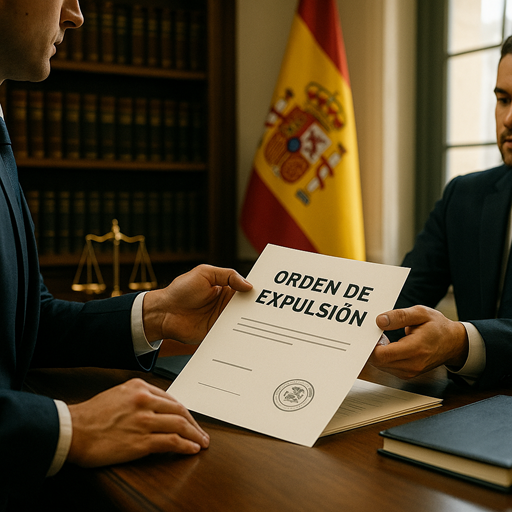
The ban on entering the country varies depending on the circumstances of the case. In general, this ban will not exceed 5 years. However, if the foreigner represents a serious threat to public order, national security, or public health, the ban can extend up to 10 years. This measure also applies to the Schengen Area territories by agreement with the member countries.
How Revocation/Cancellation Works (and When It’s Possible)
Clients often search: “cancel expulsion order Spain” or “revoke expulsion order Spain.” The key is understanding the difference between appealing (challenging the decision through remedies) and revocation (a specific mechanism that can apply in defined circumstances, including changes in your situation and the existence of strong grounds that make enforcement unjust or disproportionate). Clear strategy means selecting the right pathway and documenting it correctly.
Revocation vs annulment vs reconsideration (plain-English definitions)
- Appeal (challenge): you argue that the expulsion decision is legally or factually incorrect and request that it be reversed.
- Revocation: a specific route where the administration may withdraw/revoke an expulsion order under certain legal conditions, particularly when linked to residence applications and exceptional circumstances.
- Entry ban lifting/reduction: a related but distinct objective that may require its own strategy.
Revocation of the Expulsion Order
The revocation of the expulsion order is possible under various circumstances, as stipulated in Article 241 of Regulation 557/2011. Some situations that may lead to revocation include:
- If the foreigner who has been subject to an expulsion order for irregular stay demonstrates that they have previously applied for a residence permit based on exceptional circumstances.
- If, in the case of expulsion for irregular stay or working without a permit, the foreigner has applied for residence for exceptional reasons (such as in cases of victims of gender-based violence, trafficking victims, or cooperation with organized crime).
- If the foreigner has an expulsion order pending execution but there is clear evidence that their residence application might be successful, despite it not being accepted yet.
Evidence that typically matters (checklist by scenario)
Competitors often mention “family ties” or “integration” without telling you what to actually submit. Evidence depends on your situation. Below are practical categories we commonly use to build a persuasive file:
- Family ties in Spain: proof of spouse/partner, minor children, dependency, schooling, cohabitation, caregiving responsibilities.
- Long residence / integration: registration history, stable address, community integration, training, employment history, tax/social security records (where applicable).
- Vulnerability / humanitarian factors: medical documentation, pregnancy, care responsibilities, risk factors and social reports.
- Residence process evidence: proof of ongoing or planned regularization via exceptional circumstances or other legal routes (where relevant).
- Procedural defects: improper notification, lack of individualized proportionality assessment, missing reasoning, or inconsistencies in the file.
The Fine Instead of Expulsion (Proportionality Matters)
The Supreme Court, in its ruling no. 366/2021, established an important doctrine regarding penalties for irregular stay in Spain. According to the Court of Justice of the European Union (CJEU), there is no automatic link between irregular stay and expulsion. The EU return directive requires additional aggravating circumstances for expulsion to proceed.
In this regard, case law establishes that the general rule will be the imposition of a fine for irregular stay, and only if aggravating circumstances are found to justify expulsion will this measure apply. The principle of proportionality must prevail, and the most severe sanction, expulsion, will only be applicable when the facts justify it.
Thus, expulsion is considered an extraordinary measure, and its application will depend on the specific details of the case file and the assessment of the aggravating factors present.
Execution Deadline for the Expulsion Order (How Fast Can It Happen?)
People often search “what happens after receiving an expulsion order in Spain” and “can an expulsion order be suspended in Spain.” Enforcement timing depends heavily on the route used and your circumstances. That’s why rapid action—especially for suspension—is sometimes essential.

The deadline for executing the expulsion order depends on the type of procedure followed:
- Preferred Procedure: The expulsion will be executed immediately.
- Ordinary Procedure: The foreigner will have a voluntary period to leave the country, which can be extended if they have dependent children or exceptional circumstances. If the foreigner fails to leave Spain within that period, forced expulsion will take place.
Special Scenarios (We Tailor the Strategy)
Expulsion defense is not “one-size-fits-all.” The fastest and strongest path depends on your profile, your legal history, and your evidence. These are common scenario clusters we handle for English-speaking clients in Spain:
Family ties in Spain (children, spouse/partner, dependency)
Family ties can be decisive for proportionality and for building a suspension/defense strategy. Evidence must be specific: not only certificates, but also real-life impact (care responsibilities, schooling, cohabitation, dependency, and the best interests of minors).
Residence renewals and expulsion orders (compatibility risks)
When a renewal or regularization process overlaps with an expulsion file, timing and procedural coordination become critical. In some cases, the administration proceeds with expulsion even if a residence application is pending; in others, a strong regularization pathway can support revocation or suspension arguments. Your file must be aligned and consistent.
Challenging an expulsion order from abroad
If you are outside Spain or were removed, options may still exist—especially around the entry ban and procedural defects. Success depends on documents, deadlines, and the specific wording of the decision. We can assess your case remotely and outline realistic steps.
How Our Legal Service Helps (Expulsion Order Defense & Cancellation)
Clients looking for “lawyer for expulsion order Spain” usually need two things immediately: clarity and action. Our service is structured around urgency, evidence, and compliance with procedure—so your defense is not only persuasive, but also filed correctly and on time.
Case assessment + urgency triage
We review your resolution, confirm what type of order it is, identify the competent authority, calculate deadlines, and assess enforcement risk. If you are within an urgent window, we prioritize the actions that protect your position immediately.
Drafting allegations/appeals + requesting suspension (medidas cautelares)
We prepare structured allegations and appeals that respond directly to the legal grounds and proportionality issues, and where necessary, we design a suspension strategy to prevent enforcement while your challenge is pending.
Revocation/cancellation requests + entry ban strategy
We separate objectives clearly: challenging the expulsion decision, pursuing revocation pathways where legally available, and addressing the entry ban (Spain/Schengen consequences) with the appropriate strategy.
Transparent scope (what affects complexity)
- Procedure type (ordinary vs preferred) and enforcement risk.
- Timeline (how close you are to deadlines and whether urgent filings are required).
- Evidence strength (family ties, residence history, integration, vulnerability, proportionality arguments).
- Entry ban scope (Spain-only vs Schengen implications and whether separate steps are needed).
Frequently Asked Questions About the Expulsion Order (FAQ)
Below we answer the most urgent questions people search in English after receiving an expulsion order in Spain: deadlines, appeal options, suspension, revocation/cancellation, and Schengen entry bans.
- In which cases can an expulsion order be imposed? An expulsion order can be imposed when the foreigner has committed serious or very serious infractions, such as breaches related to irregular stay, public order, national security risks, or certain criminal convictions. The specific grounds and proportionality assessment in your file are decisive for defense strategy.
- What is the duration of the entry ban? The entry ban generally does not exceed 5 years, but it may extend up to 10 years in exceptional cases involving serious threats to public order or national security. Always verify the exact duration written in your resolution.
- How is the expulsion procedure initiated? It can begin ex officio or following police action/complaint. Spain typically uses an ordinary or preferred procedure. The preferred procedure is faster, which is why early legal action is critical.
- How do I appeal an expulsion order in Spain? Expulsion orders can often be challenged through an administrative remedy (such as an appeal for reconsideration) and/or a court appeal (contentious-administrative), depending on what the resolution states. Deadlines and the correct authority are essential—filing the wrong remedy can cost you your case.
- What is the deadline to appeal an expulsion order in Spain? Deadlines depend on the remedy indicated in your resolution. In many cases, reconsideration is within one month and court appeal within two months from notification, but you must follow the remedies section in your specific decision.
- How can I suspend an expulsion order in Spain while appealing? Appeals do not always automatically stop enforcement. When there is a risk of removal, you generally need to request suspension/precautionary measures (“medidas cautelares”) and support it with strong proportionality and harm arguments.
- What happens if the expulsion is not executed within the established time frame? If the administration does not resolve within the maximum period indicated for the procedure, it may be possible to request expiration of the procedure under the applicable regulation, depending on the specifics of your file.
- Can an expulsion order be revoked or cancelled? In certain situations, yes. Revocation pathways may apply in defined circumstances, and strong proportionality grounds (family ties, long residence, vulnerability, changed circumstances) can support cancellation/revocation strategies. Your evidence file is key.
- Does an expulsion order automatically include a Schengen entry ban? Many expulsion orders include an entry ban, but scope and consequences vary by case and resolution wording. Some bans may have broader Schengen implications. We review your decision to determine the realistic strategy to lift or reduce it.
- What happens if I do not comply with the deadline to leave the country? If you do not leave during the voluntary period (when granted), enforcement risk increases, including possible detention and forced removal depending on circumstances and procedure type.
- Can I avoid expulsion if I have family in Spain? Strong family ties can be decisive in proportionality analysis and may support suspension or cancellation arguments, especially when minors or dependency are involved. Outcomes depend on the seriousness of alleged grounds and the evidence quality.
- Can the execution of the expulsion be suspended if I have a child or spouse in Spain? In some cases, yes—particularly if expulsion would cause disproportionate harm to family life and the best interests of minors. Evidence must be specific, organized, and aligned with the file.
- Can a less severe sanction than expulsion be applied? In certain cases, a fine may apply instead of expulsion, especially where expulsion is not proportionate and aggravating circumstances are not sufficiently supported. The file’s reasoning and evidence are decisive.
- Can an expulsion order be applied if I am already in the process of applying for residence? Yes, it can be, especially if the residence application has not been granted. However, a strong regularization pathway and evidence can support arguments for suspension, revocation, or proportionality depending on the case.
- Can I return to Spain after being expelled? If an entry ban applies, return is generally blocked until the ban ends or is lifted/reduced through the appropriate pathway. Strategy depends on ban duration, scope (Spain/Schengen), and your personal circumstances.