

If you’re searching for 10-year permanent community card renewal Spain, permanent EU family card renewal Spain, or tarjeta comunitaria permanente renewal, you’re likely at the “I need to get this done” stage. This page is built as a product/service page: you’ll get a clear, Spain-specific renewal playbook (documents, fees, appointments/huellas, online filing, timelines, and common pitfalls) and the option to have Lexmovea handle your renewal end-to-end—from forms and fee guidance to appointment strategy and follow-up.
Most official sources explain rights and definitions but don’t walk you through the operational journey. Many blogs cover the basics but blur card types (mixing EU family permanent card with long-term residence / larga duración) and skip the real pain points: no appointments available, which fee to pay, how to track, what to do if your card is expired or lost, and whether you can travel while pending. Below, we make it practical—step-by-step and scenario-based.
Get your renewal handled—without delays or rejected documents
Our done-for-you renewal support is designed for people living in Spain who need to renew the 10-year permanent “community” (EU family member) residence card/TIE and want a smoother path through the practical steps: document checklist, correct form selection, fee guidance (Modelo 790), appointment strategy (cita previa / huellas), submission route (online where applicable), and follow-up until collection.
- We reduce appointment friction: guidance on where, how, and what to prepare for huellas, including what to do if there are no appointments.
- We prevent avoidable rejections: clear checklist + correct evidence for your specific scenario (expired, lost/stolen, new passport, address change, family changes).
- We keep it traceable: resguardo/receipts, organized PDFs, and tracking guidance so you always know what stage you’re in.
First—confirm you have the right card (avoid the #1 mistake)
Before you gather documents or pay fees, confirm you are renewing the correct card type. Many applicants lose weeks because they follow guidance for the wrong regime.
Permanent Community Card (EU family member) vs Long-term Residence (Larga Duración)
- What this page covers: the 10-year permanent EU family member card (often described as “permanent community card” / Familiar de ciudadano de la Unión – Permanente).
- What this page is NOT: Residencia de larga duración or Larga duración-UE (a different regime with different requirements and logic).
If your card says “Familiar de ciudadano de la Unión – Permanente” (10 years)
If your TIE wording indicates EU-family permanent status (and it is the 10-year card), you’re in the right place. The renewal is essentially the issuance of a new physical card (TIE) because the right of permanent residence does not usually disappear just because the plastic card expires—but you still need the updated card to prove your status for travel, contracts, banking, and routine administration.
The 10-year permanent community card is a physical residence card (TIE) linked to permanent residence as a family member of an EU citizen. It is valid for 10 years and helps you prove your legal residence in Spain for everyday procedures. In practice, keeping it current avoids problems with identification checks, travel documentation, and administrative transactions.
Requirements to Renew the 10-Year Permanent Community Card
People searching permanent community card renewal requirements Spain usually want two things: (1) a clear “what’s needed” list, and (2) clarity about what is not required (because many blogs mix regimes). The permanent EU-family card renewal generally focuses on identity, current card, fee/appointment readiness, and updated personal data—plus extra documents only when a scenario applies.
To renew your 10-year permanent community card, you typically need to meet the following practical requirements:
- Core identity + card documentation: Provide your valid passport (or valid travel document), your current community card (TIE), and any required proof of residence/address depending on the office’s practice. The renewal is primarily a card update, so document clarity and validity matter more than “re-proving everything.”
- Permanent status context: This is a permanent EU-family residence status, so renewal is usually about reissuing the physical card rather than re-litigating the original eligibility. That said, certain edge scenarios (long absences, major family changes, identity changes) may require additional evidence.
- Appointment readiness (huellas): You must be able to attend the relevant appointment stage (commonly fingerprints / toma de huellas) and bring the correct forms, photos, and fee proof.
- Updated data: If your personal details have changed (new passport, name changes, address change), you should document it properly so the new card is issued without errors.
Important note: Many guides incorrectly list “income/contract” or “health insurance” as general renewal requirements because they mix this card with other regimes. For the permanent EU-family card, the renewal typically focuses on card issuance requirements. If you have a complex scenario (e.g., divorce, death of the EU citizen, long absences), a tailored review is strongly recommended because the strategy can change.
Document checklist (standard renewal) + extra documents by scenario
What documents do I need to renew the permanent community card?
For most standard renewals, you should prepare a clean “renewal pack” with readable copies (PDFs if submitting online) and originals for the appointment. While requirements can vary slightly by office/province, the following checklist covers what applicants most commonly need for a smooth renewal.
- Valid passport (and a full copy of relevant pages).
- Current TIE (your expiring/expired permanent community card).
- Completed application form (correct form for the card issuance/renewal route; many applicants confuse forms—Lexmovea confirms the correct one before filing).
- Proof of payment of the applicable Modelo 790 fee (see fee section below for guidance).
- Passport-sized photo(s) with the required background and format for TIE issuance.
- Proof of address / empadronamiento if requested by your police station/office practice (often advisable when there has been a recent address change).
Document quality tip: Many delays come from unreadable scans, missing fee proof, or mismatched passport details. The “easy win” is ensuring every file is legible, consistent, and named clearly for online submission.
Extra documents by scenario (lost/stolen, new passport, change of address, family changes)
- Lost / stolen / damaged card: add the police report or loss declaration and any additional identity proof requested by the office. These cases are urgent and often benefit from professional handling.
- New passport: include the new passport and a copy of the old one if available, plus proof linking the identity details if numbers changed.
- Change of address: updated empadronamiento and any required proof of registration to avoid “wrong office” appointment issues.
- Change in family situation (marriage/divorce/birth): bring updated civil status documents if they affect the record. Divorce/death scenarios require a case review because the strategy depends on your legal pathway to permanence.
- Long absences / time outside Spain: be prepared to explain travel history if it is extensive, because it can raise questions about effective residence.
Step-by-step renewal process in Spain
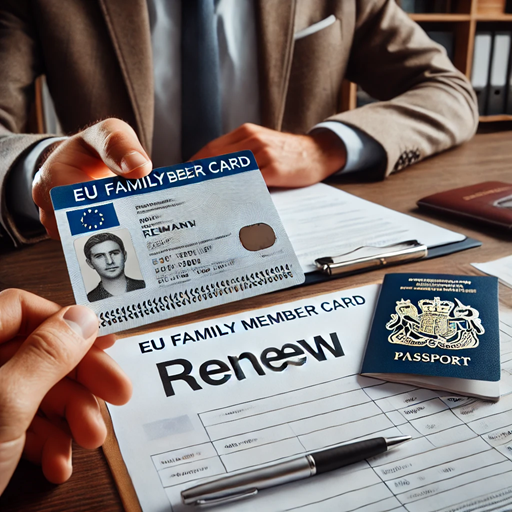
Most applicants want a clear workflow: fees → appointment/huellas → submission/receipt → tracking → collection. Below is the practical, Spain-specific journey for renew 10 year residency card Spain EU family member cases, including online options where applicable.
Two common ways to handle the process (depending on province and your access to digital tools):
- In person: via the relevant appointment channel (often at the police station for huellas) with the required form(s), fee proof, and documentation.
- Online: through electronic channels (often described by users as Mercurio / electronic submission). This typically requires a digital certificate or representation by an authorized professional.
Regardless of the route, the practical steps usually look like this:
Step 1 — Fees (Modelo 790 / correct code) and payment proof
How much is the fee to renew the permanent community card in Spain? The renewal involves an administrative fee paid via Modelo 790 (the exact code and amount depend on the specific procedure step and can vary by updates). The key operational point is: bring proof of payment to the appointment and/or include it in the online submission pack. If you pay the wrong fee or forget proof, you can lose your slot and delay the renewal significantly.
Lexmovea’s support includes confirming which fee applies in your situation, how to pay it correctly, and how to attach it so it is accepted without back-and-forth.
Step 2 — Booking the appointment (cita previa) / huellas
How do I get a cita previa for permanent community card renewal? Most renewals require an appointment for toma de huellas (fingerprints) and card issuance steps. Appointment systems differ by location and are often the hardest part of the process. The most important practical rule is to book the appointment for the correct jurisdiction (usually tied to where you are registered/empadronado) and to prepare your pack before the slot—because missing documents can force rebooking.
If there are no appointments available: this is a common bottleneck. Strategy matters: understanding when new slots are released, checking the correct categories, and ensuring you’re using the right office/police station for your address. Our service includes appointment strategy and contingency planning to reduce delays.
Step 3 — What happens at the appointment (fingerprints, photo, receipt)
At the huellas appointment, your documentation is checked, fingerprints are taken, and you receive a receipt/proof that your card issuance is in process. Bring your passport, current TIE, fee proof, photo(s), and any supporting documents requested for your scenario (lost card report, new passport, updated padrón, etc.).
Step 4 — After submission: tracking status + collecting the new card
After your appointment/submission, you may be able to track progress through the relevant portals depending on the route used. The practical focus is to keep your receipt and monitor any notifications so you can respond quickly if something is missing. Once ready, you’ll collect your new EU family member permanent TIE as instructed by the issuing office.
Timelines, processing time & what you can do while waiting
Processing times vary by province, season, and appointment availability. Many users care less about the “official estimate” and more about what they can safely do while their renewal is in progress—especially when the card is expired or they need to travel.
The estimated processing time for renewal typically ranges from 3 to 6 months depending on the workload and appointment availability. In practice, appointment access is often the real driver of delays, so preparing early and following a structured process reduces risk.
How early to renew + what if it’s expired
Best practice is to start preparing your renewal pack well before expiry so you can secure an appointment and avoid administrative friction. If your card is already expired, you should still proceed as soon as possible: you typically do not “lose” permanent status just because the card expires, but you can face practical problems proving your status for travel, work onboarding, banking, or other procedures. A clean renewal strategy is the fastest way to restore normal documentation.
Can I travel while my permanent community card renewal is in process?
This is one of the highest-anxiety questions—and one of the biggest gaps in competitor pages. Travel risk depends on your exact situation: whether your card is expired, whether you have a receipt proving the renewal is in process, your passport validity, and your travel route. At minimum, you should carry your passport, your old TIE (even if expired), and your renewal proof/receipt. If you have urgent travel plans, it is strongly recommended to get case-specific advice before departure so you don’t get stuck on re-entry.
Special Considerations for Renewal
- Time Spent Outside Spain: Extensive absences can complicate your renewal if they raise effective-residence questions. If you have traveled a lot, it’s wise to review your travel history before filing.
- Changes in Family Situation: Document changes such as marriage, divorce, or the birth of children correctly. Divorce/death scenarios may require a tailored legal strategy depending on how your permanent status was consolidated.
- Criminal Record: Issues in Spain or abroad can affect administrative procedures. If you have concerns, address them proactively with a case review.
- Data Modifications: New passport, name changes, or address changes should be updated to avoid mismatches and rework.
Associated Costs (fees + document preparation)
Costs usually fall into two buckets: government fees (Modelo 790) and practical preparation costs (translations, copies, document retrieval) plus optional professional fees if you hire help.
- Administrative Fees (Modelo 790): You must pay the fee established for the procedure and present the proof of payment. Using the wrong code or missing proof is one of the most common causes of delays.
- Translation and Apostille Costs: If you must submit foreign documents for a specific scenario, they may need sworn translation and legalization.
- Professional Fees (optional): If you hire Lexmovea, pricing depends on complexity: standard renewal vs lost/stolen, expired card urgency, heavy travel history, family situation changes, or appointment constraints.
- Document Procurement Costs: Some documents can have retrieval costs depending on where they are issued and how urgently you need them.
- Shipping Costs: If you need to send documentation, include courier costs in your planning.
Our renewal service (what’s included)
Our service is built for people who want a reliable, low-friction renewal process. We combine legal accuracy (correct card type, correct route) with operational execution (appointments, forms, submission pack, tracking).
What we do (done-for-you support)
- Card-type confirmation: we verify you are renewing the correct EU-family permanent TIE (and not a different regime).
- Document checklist + review: we tell you exactly what to provide, and we verify it’s complete and consistent.
- Forms + fee guidance: we help ensure the correct form route and Modelo 790 payment proof is prepared correctly.
- Appointment strategy: we guide you to the correct appointment category and jurisdiction and help troubleshoot “no appointments” scenarios.
- Submission + follow-up: guidance on online submission where applicable and how to track/monitor to avoid missed notifications.
What you do vs what we do (reduces friction)
- You: share your documents, confirm your travel plans and scenario details, attend the appointment if required.
- Us: build the renewal pack, guide the correct steps, prevent mistakes, and help you progress from “I’m stuck” to “my new card is issued.”
Why Trust Lexmovea for Your 10-Year Permanent Card Renewal?

Renewing a permanent EU-family TIE is often “simple” in theory and surprisingly painful in practice because of appointments, forms, and scenario exceptions. Lexmovea focuses on removing the friction and reducing risk. Our team helps you avoid the most common renewal failures: wrong card type, missing fee proof, appointment mistakes, and incomplete scenario documentation.
- Legal clarity: We separate EU-family permanent renewals from larga duración processes to avoid misfiling.
- Operational experience: We build renewal packs designed to be accepted with minimal back-and-forth.
- Scenario handling: Lost/stolen cards, expired cards, new passports, travel urgency, and family changes are handled with a clear plan.
- Fast escalation: If delays or issues arise, we help you act quickly and correctly.
Should I Renew My 10-Year Permanent Community Card?
Yes—keeping your physical card updated is essential even if your underlying permanent status does not vanish simply because the plastic expires. An updated card helps you prove your lawful status in Spain for everyday procedures (employment onboarding, banking, contracts) and reduces travel friction. In other words: you are renewing the card, not “re-applying” for permanent rights—yet not renewing the card can create real administrative problems.
It is also worth noting that your lawful residence history can be relevant for long-term planning (including certain nationality pathways by residence, if your overall situation meets the applicable requirements). If you want to align your renewal with a broader plan, we can advise strategically.
Frequently Asked Questions About the Renewal of the 10-Year Permanent Card
- How do I renew my 10-year permanent community card in Spain? Prepare your renewal pack (passport, current TIE, correct form, fee proof, photo, and any scenario documents), pay the applicable Modelo 790 fee, secure your cita previa/huellas appointment (or submit online where applicable), attend the appointment, keep the receipt, and then collect the new card when ready. If you want it handled end-to-end, Lexmovea can manage the workflow and reduce appointment/document errors.
- What documents do I need to renew the permanent community card? Standard renewals typically require a valid passport, your current TIE, the correct application form, proof of fee payment, and a compliant photo; depending on office practice you may also need updated empadronamiento. Additional documents apply for lost/stolen cards, new passports, address changes, or family situation changes.
- How do I get a cita previa for permanent community card renewal? Book the appointment under the correct category and jurisdiction tied to your registered address. If there are no appointments available, use a strategy: correct office selection, correct procedure category, and systematic checking. We help clients troubleshoot the “no appointments” bottleneck and avoid wasting weeks on the wrong booking path.
- How much is the fee to renew the permanent community card in Spain? You must pay the applicable administrative fee via Modelo 790. The exact code and amount depend on the procedure step and can change, so it should be verified at the time of filing. The most important operational point is to bring/include proof of payment correctly—missing or incorrect fee proof is a top cause of delays.
- Can I travel while my permanent community card renewal is in process? Travel risk depends on whether your card is expired, whether you have renewal proof/receipt, and your travel route. At minimum, carry your passport, your old TIE (even if expired), and your renewal proof. If travel is urgent, get case-specific advice before you leave to avoid re-entry complications.
- What happens if the card expires before renewal? If your underlying permanent status remains valid, an expired card is primarily a proof-of-status problem—but it can cause serious practical issues. Renew as soon as possible and keep any renewal receipts to prove your situation while the new card is being issued.
- What should I do if my renewal is denied or I’m asked for more documents? Don’t guess—respond strategically. Many issues are fixable with the correct documents and a structured submission. Lexmovea can review the reason, prepare a response, and guide next steps.
- Can I renew the permanent community card online? In some cases, yes—online submission is possible through electronic channels if you have the necessary digital access (or an authorized representative). Whether online is optimal depends on your province and scenario. We confirm the best route and provide a traceable submission plan.
- Do I need proof of income or employment to renew this permanent EU-family card? For a standard physical-card renewal, it is not typically required in the same way as other regimes (and many articles confuse this with larga duración or other permits). However, if your case involves complex scenario factors (long absences, family status changes), it’s best to obtain tailored guidance.
- What if my card is lost or stolen? Treat it as urgent. You’ll usually need a loss/theft report plus identity documentation and then proceed with replacement/renewal steps. These are high-friction cases where professional handling can save significant time.