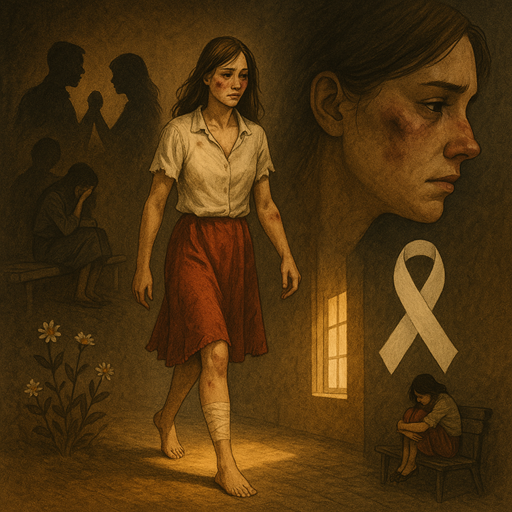

Residence permit for women victims of Gender-Based Violence in Spain

If you are a foreign woman living in Spain and you have experienced gender-based violence (GBV) or domestic violence, you may be eligible for a residence permit or a residence and work authorization under exceptional circumstances. This pathway is designed to protect victims/survivors and reduce the fear that reporting abuse will automatically harm your immigration status. In many cases, the key starting proof is a protection order (orden de protección) or a Public Prosecutor’s report (Ministerio Fiscal) indicating signs of GBV—however, the process is often confusing, especially if you are undocumented, your visa/permit has expired, you depend on a partner through family reunification, or you do not have a protection order yet.

This page is written in plain English to help you understand: who can apply, what evidence is needed, how the application works step by step, what happens to your children/dependents, when you can work, and what to do next—always with a safety-first, confidential approach. If you want legal help, Lexmovea can support you from the first review through filing and representation, including urgent guidance for high-risk situations.

Index

Safe, Confidential Immigration Support (Start Here)

We understand that many women search for “residence permit Spain domestic violence victims” at a moment of fear, urgency, and uncertainty. Our approach is confidential and focused on your safety. You control what you share and when. We can review your situation and explain the options without pressure, helping you understand the evidence requirements and the safest legal steps.

If you are in immediate danger

If you are at immediate risk, prioritize safety and emergency support first. Spain has specialized resources for victims of gender violence (including the 016 hotline in many languages) and emergency services. Once you are safe, we can help you understand the immigration steps that may be available and how to prepare a residence application with the right documentation.

Confidentiality and data protection

Your situation may involve sensitive information. We handle your data carefully and only request what is necessary to assess eligibility and file your case. If you prefer, we can begin with a minimal document review (decision letters, basic identity documents, and any available police/court paperwork) and build the file gradually.

What Residence Authorization Is Available for Victims of Gender-Based Violence in Spain?

Many users search for “residence permit for victims of gender violence Spain” or “residence and work permit for gender violence victims Spain.” In Spain, victims/survivors may access a residence authorization under exceptional circumstances, which can include work authorization. The goal is to protect victims while the criminal procedure is ongoing and to provide a stable solution once the case is resolved in a way that recognizes the victim status.

Residence authorization under exceptional circumstances (overview)

This authorization is designed to ensure that a woman’s immigration situation does not become a barrier to seeking protection. In practice, there may be a provisional stage linked to the criminal process (based on certain evidence such as a protection order or prosecutor’s report), and a final authorization stage after the criminal procedure ends with a decision that confirms the violence circumstances.

Residence and work authorization: when you can work

One of the strongest conversion questions is: “Can I work in Spain with a residence permit for gender violence victims?” The authorization can include the right to work, and in the wording of many resolutions it allows work for an employer or self-employed across Spain. Timing and scope depend on the stage of the procedure and the type of authorization granted, so we always align your immigration strategy with your immediate needs (safety, income, housing, children) while keeping the file legally consistent.

Can your children/dependents be included?

In many cases, you can request authorization for your minor children, and for children over 16 years old who were in Spain at the time of the complaint, the pathway may allow residence and work authorization. The validity of their authorization typically aligns with yours, helping keep the family unit stable while the criminal process continues and while Extranjería resolves your case.

Eligibility & Requirements (Plain-English Checklist)

People often search for: “requirements for residence authorization for victims of gender violence in Spain” and “documents needed for residence permit for domestic violence victims Spain.” The requirements are evidence-driven and depend on your procedural stage. Below is a practical checklist to understand what usually matters most.

Who can apply (including undocumented or expired status)

This pathway is relevant for many non-EU women in Spain who have suffered gender-based violence, including women who are undocumented, women with an expired visa, and women whose residence depends on their partner (for example, through family reunification). Each scenario changes how we build the evidence package and how we plan the “next steps” after filing.

What proof is needed (protection order, prosecutor report, court documents)

As a general rule, you will need documentation showing indicators of gender-based violence or a judicial/official recognition of the situation. The most common starting proofs include a protection order or a report from the Public Prosecutor’s Office indicating signs of GBV. Later stages may require a judgment or another judicial decision confirming victim status. The correct proof depends on your case status, and we will review what you have and what can realistically be obtained within your timeline.

What if you don’t have a protection order yet?

This is one of the most common fear-based questions: “Do I need a protection order to apply for residency as a domestic violence victim in Spain?” The short answer is that many procedures rely on specific types of official evidence, but your options can depend on what documentation exists in your case and the stage of the criminal process. If you do not have a protection order yet, the first step is an urgent legal review of what you do have (complaint/atestado, court communications, prosecutor involvement, victim services paperwork) to determine the safest and most realistic pathway—and whether additional evidence should be requested before filing.

Step-by-Step: How the Application Works (Extranjería)

Competitors are often PDFs or institutional guides that explain rights but do not tell you what to do next. Below is a practical workflow for “how to apply for a residence permit as a victim of gender-based violence in Spain,” designed to reduce confusion and help you take action safely.

1) Before applying: document strategy and preparation

We start by identifying the correct pathway and the evidence that matches your stage (provisional vs final). We then build a structured document pack: identity documents, your procedural proof (protection order/prosecutor report/judicial decision), and supporting documents that help Extranjería understand your situation clearly and quickly. If any documents require translation or formal formatting, we organize this early to avoid delays and subsanación requests.

2) Filing: online vs in-person and what we handle for you

Submission can be electronic or in-person depending on the case and practical constraints. Our role is to ensure the application is filed correctly, the evidence bundle is coherent, and the legal narrative is clear—so the authority can process your file without unnecessary back-and-forth. We also confirm fee requirements and submission confirmations so you retain proof of filing.

3) After submission: timelines, priority processing, and what to do while pending

Many users ask: “timeline for residence permit for victims of gender violence Spain” and “what happens while pending?” While processing times vary, your case may receive priority processing. We also guide you on practical next steps while waiting (safe communication, responding to requests for additional documents, and planning for the next stage depending on how the criminal procedure evolves).

Benefits for your children in case you are a victim of gender-based violence.

Benefits for your children in case you are a victim of gender-based violence

You can request authorization for your children in the initial application and, in many cases, at any point during the criminal process. For minor children, the authorization is typically a residence authorization. If your child is over 16 and was in Spain at the time of the complaint, the request may be for a residence and work authorization. In practice, the validity usually matches yours, allowing your children to remain legally protected while your case is processed.

Additional Protection

This pathway also includes protections designed to reduce fear for women who are undocumented or whose permit has expired. The objective is to avoid immigration penalties being used as a barrier to reporting and seeking protection.

  • No sanctioning procedures will be initiated solely due to irregular status while the criminal process is ongoing, and any prior procedures may be suspended according to the applicable framework.
  • The processing of your application may be given priority, reducing uncertainty and helping you stabilize your legal situation faster.

Required Documentation for Residence for Women Victims of Gender-Based Violence

Below is the operational checklist most applicants need. The key is not only having documents, but presenting them in a clear, consistent way that matches the legal stage of your case. This is where many institutional guides stop short—our role is to help you file a complete, persuasive, safety-first application.

  • Model EX-10.
  • Copy of the full passport (ensure the passport meets the minimum validity requirements) for you and your minor children (if included).
  • Fee Model 790, Code 052, section 3, paid when submitting the application (keep proof of payment).
  • Documentation proving the complaint and GBV indicators:
    • Protection order or Public Prosecutor’s report indicating signs of gender-based violence: often linked to the provisional residence and work authorization stage, depending on your procedural posture.
    • Conviction sentence or another judicial decision confirming you are a victim of gender-based violence: typically supports access to the final residence and work authorization stage.

Submission Deadline

Deadlines depend on whether the criminal procedure is ongoing or has already concluded. Because deadlines can be strict and documentation-sensitive, we recommend acting early and not waiting until your situation becomes urgent.

  • If the criminal process has not concluded: you can typically submit after the protection order or the Public Prosecutor’s report is issued, depending on your case stage and evidence.
  • If the criminal process has concluded: there is a time window to file after notification of the sentence or judicial resolution confirming victim status (the exact calculation depends on the document and notification).

Validity and Effects of the Authorization

The residence and work authorization is designed to restore stability. It can allow you to work as an employee or self-employed across Spain, helping you rebuild independence. The scope and timing depend on the stage (provisional vs final) and the resolution you receive.

Where applicable, the authorization may begin as provisional while the criminal process is ongoing. Importantly, the documentation should not expose you to additional risk: procedural wording may avoid specifying the sensitive details of the underlying circumstances, focusing on the authorization’s administrative purpose.

Special Situations We Handle (High-Risk / High-Confusion Cases)

Institutional guides rarely address edge cases in a client-ready way. These are the scenarios with the highest anxiety—and the highest need for careful strategy. If you identify with any of the below, a confidential legal review is strongly recommended.

Undocumented or expired visa/permit

Many women search “residence permit for undocumented women victims of domestic violence in Spain” because they fear deportation if they report abuse. The exceptional circumstances pathway is designed to protect victims even if their status is irregular. The key is to build the file safely and correctly, using the appropriate evidence and timing, and to coordinate communications so you do not expose yourself unnecessarily.

Dependent residence via spouse/partner (family reunification) → independent permit

If your immigration status depends on your partner (for example, you hold a residence permit through family reunification), abuse can create urgent questions: “Can I keep my residency in Spain after separation due to domestic violence?” In many cases, there are options to transition to an independent residence permit when violence is proven within the legally recognized context. We help you understand the safest path, evidence needed, and how to protect your continuity of legal residence.

Without a protection order (yet): evidence strategy

If you do not have a protection order, the next steps depend on what evidence exists in your case and how the procedure is developing. We can assess what documentation is available now (complaint-related documentation, prosecutor involvement, court communications) and advise on a safe evidence strategy. The goal is to avoid filing too early with an insufficient proof package—while also avoiding delay that could harm your stability or safety.

TIE card steps after approval (fingerprints/appointment guidance)

After approval, many clients search “TIE card for gender violence victims Spain.” The practical next step usually involves the TIE process (fingerprints/appointment and issuance of the card). We guide you through what to prepare, what documents are typically requested at this stage, and how to avoid delays—especially important if you need the card for employment, housing, or services.

Finalization of the Criminal Procedure and Its Consequences on Residence Authorization

Finalization of the Criminal Procedure and Its Consequences on Residence Authorization

The immigration authorization is closely connected to the status of the criminal process. When the criminal procedure reaches a conclusion, the legal basis for a provisional authorization may change. This is why we plan your file not only for the immediate step (filing) but also for the likely next step after the criminal case progresses, ensuring continuity and avoiding gaps that could affect work, housing, and family stability.

Once the criminal procedure has concluded, the provisional residence and work authorization granted to the woman victim of gender-based violence may be terminated or transformed depending on the outcome. Your next step depends on whether the outcome confirms victim status or not. This is a high-stakes transition point where legal guidance matters.

Favorable Resolution of the Criminal Process

If the criminal process concludes with outcomes that confirm the circumstances of gender-based violence, the pathway can lead to a longer, more stable authorization. Examples of outcomes that may support the final stage include:

  • A conviction and a certificate of gender-based violence
  • A judicial resolution confirming the woman has been a victim of gender-based violence
  • Dismissal of the case due to the defendant’s unknown whereabouts
  • Provisional dismissal due to the defendant’s expulsion

In such cases, the exceptional circumstances residence and work authorization may be granted after the Immigration Office receives confirmation of the outcome, and it can provide longer stability. Where applicable, any suspended immigration sanction procedure linked solely to irregular status may be definitively closed according to the applicable framework.

If you have not requested the authorization earlier, you may still have an opportunity to complete the procedure within a defined period after notification of the relevant judicial decision. Because timing and evidence are critical, we recommend acting as soon as you receive any court or prosecutor documentation.

Additionally, any immigration sanction procedure that may have been pending against the woman may be definitively closed once the legal conditions are met, reinforcing the protective purpose of this pathway.

Unfavorable Resolution of the Criminal Process

Not every criminal process ends in a decision that legally confirms victim status. If the criminal process concludes with:

  • A non-conviction sentence
  • A judicial resolution stating that the woman was not a victim of gender-based violence

The immigration consequences can be serious and must be handled carefully. In these cases, strategy becomes highly fact-specific. We recommend immediate legal review to understand whether there are other immigration options, how to protect continuity of residence where possible, and how to reduce risk of sanctions—always based on your documents and the reasoned grounds of the decision.

The following effects will occur:

  • If the residence and work authorization had been requested, it may be denied, as well as any linked applications for the applicant’s minor children, depending on the legal basis used.
  • The provisional authorization may lose effectiveness and may not count toward certain long-term pathways, depending on the applicable rules and the final legal characterization of the case.
  • An immigration sanction procedure that had been suspended or not initiated may be started or continued, particularly if the person remains in an irregular situation without another protective basis.

Our Service: Residence Permit for GBV Survivors (What You Get)

Most competitor content explains rights but does not operationalize the process. Our service is built to be practical, protective, and client-ready—especially for women who need clear next steps in English and do not know where to start.

Confidential case assessment (fast, safety-first)

We begin with a confidential review focused on eligibility, evidence, urgency, and the safest filing plan. If your situation involves undocumented status, a dependent permit, or lack of a protection order, we prioritize the decision path that best protects you while remaining legally robust.

Document strategy + drafting + representation

We organize your file to reduce delays and improve clarity: structured evidence, coherent narrative, and aligned legal grounds. Where representation is needed, we handle submissions and communications as appropriate, helping you respond to requests for additional documents and preparing you for the next procedural stage.

Nationwide support in Spain (online consultation)

We can support clients across Spain through structured remote consultations, making it easier to get guidance quickly and safely. If you are searching for urgent help, send the minimal essential documents first (decision letters, court/prosecutor documentation, and ID) so we can triage effectively.

Fees & Next Steps (How to Start)

People searching “consultation for residence permit as domestic violence victim Spain” often need transparency and reassurance. Fees vary depending on urgency, complexity, and how much evidence review is required. Cost is typically influenced by: whether you are undocumented/expired, whether children are included, the volume of court/prosecutor documentation, and whether urgent filings are needed. We can explain your options after a first confidential review.

Renewal of Residence Due to Gender-Based Violence

Renewal, modification, or extension steps can become relevant depending on your authorization type and how your situation evolves. Some applications and follow-up procedures can be handled electronically through the MERCURIO application, but the correct form and pathway depend on your specific status and the administrative category you are in. We recommend avoiding generic “one-size-fits-all” renewals and instead confirming the correct route based on your resolution and current documentation.

It is essential that applicants meet the requirements applicable to their specific authorization. Depending on the pathway, you may need to prove continuity of residence and your situation in Spain. We help ensure the documentation is consistent and legally aligned, reducing the risk of refusals due to technical mistakes.

We also recommend that victims inquire about resources in their community, such as associations supporting victims of gender-based violence, which can provide additional legal and emotional assistance during this period. Our role is to coordinate the immigration strategy so your status remains protected and workable.

The necessary forms for these requests include:

  • EX00: For the renewal of residence permits for studies, mobility, or volunteer services.
  • EX01: For the renewal of temporary non-lucrative residence authorization.
  • EX02: For the renewal or modification of residence authorization for family reunification.
  • EX03: For the renewal or modification of an initial work and residence permit.
  • EX09: For the renewal of a residence authorization with an exemption from work.
  • EX11: For the application for long-term residence after five continuous years in Spain.
  • EX19: For the permanent residence card of a family member of a EU citizen.

Legal Framework on Residence for Gender-Based Violence in Spain

The legal framework for residence protections for victims of gender-based violence in Spain is designed to prioritize victim safety and ensure access to immigration stability. In practical terms, the framework establishes that eligible women may access a protective authorization even if their administrative status is irregular—subject to meeting evidence requirements and procedural conditions. Because the law is technical and outcomes depend on documents, individualized assessment remains essential.

According to the instruction applicable to the situation of foreign women victims of gender-based violence, the following is established:

  1. Access to Authorization: Foreign women who are victims of gender-based violence may access the authorization provided in Article 31 bis of Organic Law 4/2000, which regulates the rights and freedoms of foreigners in Spain and their social integration. This access is possible regardless of their administrative status in the country, as long as they meet the established requirements.
  2. Registration Certificates: Foreign women under Royal Decree 240/2007, which addresses entry, free movement, and residence in Spain, may access or maintain the registration certificate as Union citizens or the residence card as a family member of a Union citizen. This applies without the need to meet the requirements of Articles 7 and 8 of the regulation if it is proven that they have been victims of gender-based violence in the context of a marriage or registered partnership. This justification is considered provisional with a protection order or a report from the Public Prosecutor and final with a judicial resolution confirming the alleged circumstances.
  3. Family Members: The regulation also extends to the victim’s family members, as defined in Article 2 of Royal Decree 240/2007, provided they are residing continuously in Spain and there are no limitations due to public order, public safety, or public health reasons.

With the publication of this instruction, any previous content conflicting with the established provisions is invalid. This framework is intended to protect victims/survivors, facilitate access to residence stability, and ensure their rights. For nationality, the standard nationality rules apply; there is no separate “special nationality” pathway solely because of GBV victim status, although victim protection can be crucial for maintaining lawful residence and stability.

FAQs: Residence Permit for Victims/Survivors of Gender-Based Violence in Spain

The questions below are written to match the most common high-intent searches (and the biggest decision blockers). If you want help, we recommend a confidential consultation so we can review your documents and advise the safest, strongest path.

  1. How can a victim of gender-based violence get a residence permit in Spain? In many cases, you start by obtaining official evidence linked to the complaint/criminal process (for example, a protection order or a prosecutor’s report indicating signs of GBV). You then submit the residence (and work) authorization application under exceptional circumstances with the required forms, identity documents, fee payment, and proof. The exact route and timing depend on your procedural stage and documentation.
  2. What are the requirements for a residence permit for victims of gender violence in Spain? Requirements are evidence-driven and typically include: identity documents, the correct application form, fee payment, and official documentation showing GBV indicators or judicial recognition. Requirements can differ between the provisional stage (while the criminal process is ongoing) and the final stage (after a decision confirms victim status).
  3. Do I need a protection order to apply for residency as a domestic violence victim in Spain? A protection order is a common proof used for the provisional stage, but the correct evidence depends on your case status and what documentation exists. If you do not have a protection order yet, an urgent legal review is recommended to assess what evidence you have now and what can be obtained safely before filing.
  4. Can undocumented women in Spain get a residence permit after domestic violence? Many protective pathways are designed to prevent irregular status from being a barrier to seeking protection. In practice, the key is to meet evidence requirements and file correctly while coordinating safety and timing. Because this is high-stakes, individualized assessment is essential.
  5. Can I obtain independent residency in Spain if I was on family reunification and suffered abuse? In many cases, there are options to transition to an independent permit where violence is proven within the legally recognized context. The documentation, timing, and strategy depend on your current permit type and the evidence available in your criminal procedure.
  6. Can I work in Spain with a residence permit for gender violence victims? The authorization can include the right to work as an employee or self-employed. Timing and scope depend on the stage of your authorization and the specific resolution issued by Extranjería.
  7. Can my children be included in my application? In many cases, yes. Minor children may obtain residence authorization, and children over 16 who were in Spain at the time of the complaint may be eligible for residence and work authorization, typically with validity aligned to yours.
  8. Does the status of a victim of gender-based violence expire? Immigration consequences can change depending on the stage and the outcome of the criminal process. This is why planning for the transition from provisional to final status is critical. If you receive a judicial resolution or changes occur in your case, seek legal review promptly to protect your continuity of residence.
  9. How to renew long-term NIE for gender-based violence / requirements to renew NIE due to gender-based violence? Long-term residence (and TIE-related processes) follow their own procedural rules, deadlines, and document requirements. Because “NIE renewal” is often used online to refer to different procedures, we recommend confirming your exact status and route first (long-term residence, TIE renewal, or other) to avoid filing the wrong request.
  10. Can Spanish nationality be applied for due to gender-based violence? There is no special nationality route solely for GBV cases. Nationality is a separate process with its own requirements. However, maintaining lawful residence and stability is often essential for future nationality eligibility, which is why a correct protective residence strategy can be important.

Legal Notice

This page provides general information and does not constitute legal advice. Every case depends on individual facts, documentation, and procedural stage. For confidential guidance, we recommend a consultation so we can assess your evidence and advise the safest, strongest pathway.