
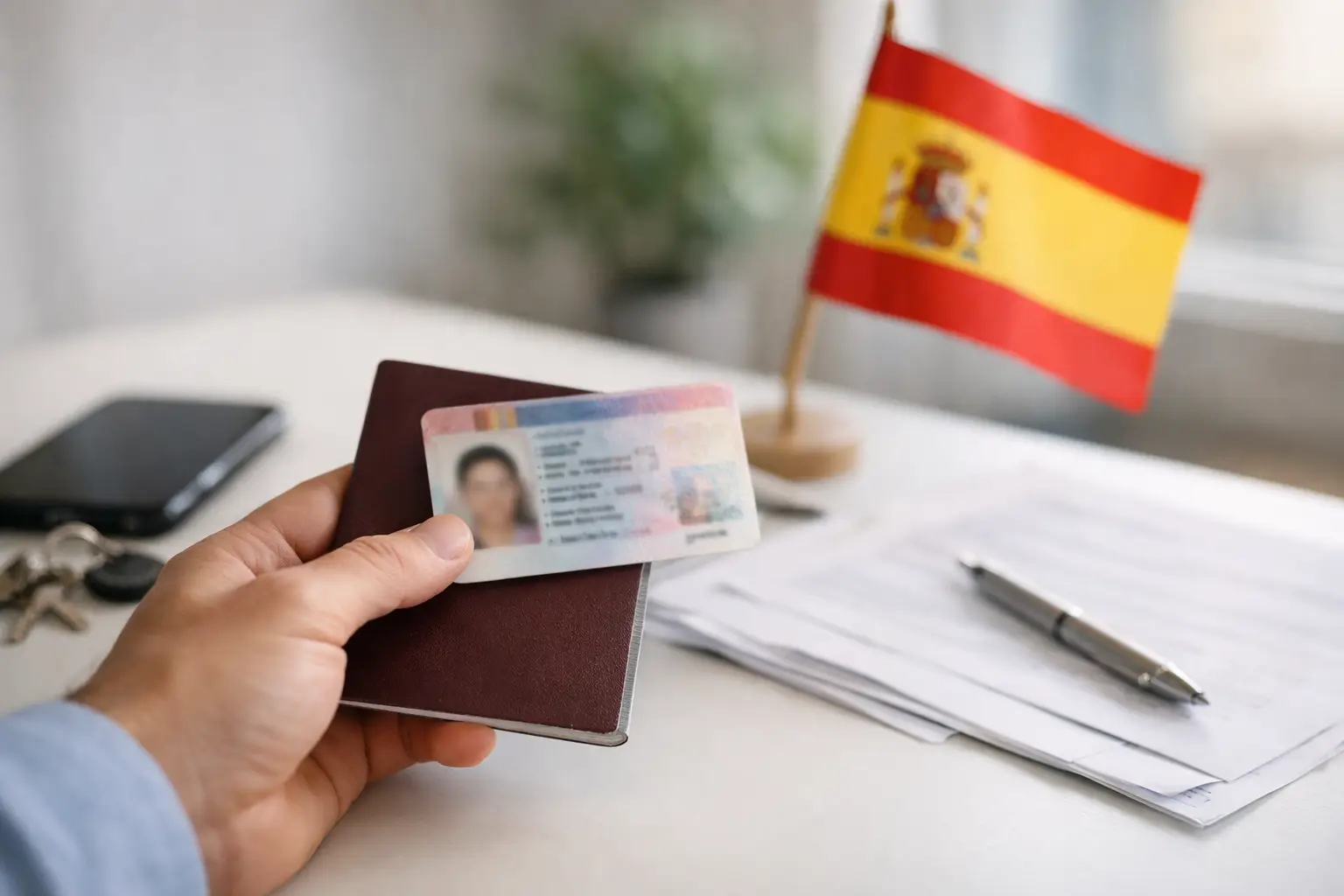
A TIE expiration date can create unnecessary anxiety, particularly when your job, family arrangements, travel, or long-term plans in Spain depend on maintaining valid status. The key point when considering how to renew TIE Spain is that you usually are not simply renewing a plastic card. In most cases, you must first renew or extend the underlying residence authorization that the TIE proves.
That distinction matters. A favorable residence renewal and a new TIE are connected steps, but they are handled at different stages and sometimes by different authorities. Filing the right application early protects your position; requesting a replacement card without addressing an expiring authorization does not.
How to renew your TIE in Spain: start with your immigration category
The correct procedure depends on the authorization behind your TIE. A person holding non-lucrative residence, for example, follows a different renewal route from an employee with a residence and work permit. Students seeking an extension of stay, family members of Spanish or EU citizens, and holders of digital nomad or highly qualified professional authorizations may also have separate rules, filing systems, and eligibility criteria.
Before an application is prepared, confirm three points: the exact legal category on your current authorization, the expiration date of the authorization itself, and which authority granted it. Many standard residence renewals are processed through the relevant Oficina de Extranjería. Certain applications under the Entrepreneurs Law, including some international telework and highly qualified professional cases, may be handled through the Unidad de Grandes Empresas y Colectivos Estratégicos (UGE-CE).
The wording on your current resolution, not just the date printed on your TIE, is often the best starting point. If you have changed employer, family circumstances, financial situation, address, or work activity since your last approval, that change should be reviewed before filing. It may affect whether a straightforward renewal is appropriate or whether a modification or a different application is needed.
File the residence renewal before your authorization expires
For many temporary residence authorizations, Spanish immigration rules allow renewal applications to be submitted during the 60 days before expiration. In many cases, there is also a period of up to 90 days after expiration in which a late application may still be accepted, although a sanction may be possible.
The later window is not a planning tool. A late filing can complicate travel, employment verification, appointments, and dealings with public authorities. It also leaves less room to correct a document issue before your situation becomes urgent. Filing before expiration is generally the safer approach.
A timely renewal filing normally preserves the legal effect of the previous authorization while the administration processes the case. Still, the practical consequences vary by category, and a filing receipt is not a substitute for a valid new TIE in every context. Keep the official proof of submission, known as the resguardo, with your existing TIE and passport.
Electronic filing is common, but the appropriate platform and form depend on the procedure. An administrative filing must be complete, signed correctly, and supported by documents that meet Spanish formal requirements. A document in English may require a sworn Spanish translation, and foreign public documents may need legalization or an apostille, depending on the issuing country and the document type.
Evidence required for a TIE-related renewal
There is no single document package for every renewal. The administration will assess whether you continue to meet the requirements for your particular authorization. For a non-lucrative renewal, this may center on sufficient financial means and qualifying health coverage. For a work authorization, employment, Social Security, income, and employer compliance can be relevant. Family-based cases require continuing evidence of the relationship and, depending on the route, residence and dependency conditions.
A well-prepared application often includes the following documents, although the exact list changes by category:
- A valid passport and copies of relevant pages.
- The current TIE and prior residence resolution.
- The applicable official renewal form and proof of payment of required government fees.
- Evidence that the substantive renewal requirements remain met, such as employment, resources, health coverage, family relationship, or enrollment documentation.
- Proof of address where relevant, along with any documents explaining changes since the original application.
Do not assume that a document accepted during your original residence application will automatically satisfy a renewal. Immigration authorities may request current evidence, and the relevant period of employment, resources, insurance coverage, or residence can be different at renewal stage.
If the administration sends a requerimiento, or formal request for additional documents, the deadline stated in the notice deserves immediate attention. Missing that deadline can lead to the file being considered withdrawn or refused. Notices are often made electronically, so applicants and their legal representatives must monitor the designated notification channel carefully.
Approval comes before the new TIE card
Once the underlying renewal or extension has been approved, the next step is obtaining the physical TIE. This normally involves a police appointment for fingerprinting, commonly called toma de huellas. You should request it within the period specified in the approval notice, which is commonly one month.
For the fingerprint appointment, the police station commonly asks for your passport, the favorable resolution, the completed TIE form, proof of payment of the applicable TIE fee, a recent passport-size photo, and your current card. The fee for the physical TIE is generally paid using Modelo 790, código 012. Separate fees may apply to the residence or work renewal itself, often through other Modelo 790 codes.
After fingerprints are taken, you receive a receipt showing when the new card may be collected. Bring that receipt, your passport, and the previous TIE when collecting it. Check the new card immediately for errors in your name, NIE number, address, authorization type, and expiration date. A clerical error can cause avoidable problems later with employment, travel, banking, or municipal registration.
Travel while renewal is pending
International travel is one of the most sensitive issues during a renewal. An expired TIE plus a pending renewal receipt may not be enough to re-enter Spain after travel outside the country. Depending on your circumstances, you may need an autorización de regreso, or return authorization, before leaving Spain.
This document is not automatic and is not suitable for every situation. Timing, the stage of your renewal, your passport, and your planned route can all matter. It is particularly wise to seek advice before making nonessential travel plans when your card has expired or your renewal remains unresolved.
Travel within the Schengen area can also be more complicated than many applicants expect. Border practices and carrier checks are not always consistent, and an airline may apply its own document requirements. Do not rely on an assumption that a filing receipt will solve every travel issue.
Situations that are not ordinary TIE renewals
Some card issues require a different procedure. If your TIE was lost, stolen, damaged, or contains outdated personal information, you may need a duplicate or replacement card rather than a residence renewal. A change of address alone does not always change the validity of your authorization, but it should be assessed in light of your obligation to keep records accurate.
Long-term residence creates another common point of confusion. The underlying right to long-term residence is generally indefinite, but the physical TIE must still be renewed periodically. That is primarily a card-renewal process rather than a new assessment of temporary residence requirements.
EU family cards also need careful analysis. A five-year tarjeta de residencia de familiar de ciudadano de la Unión may lead to an application for permanent residence if the legal conditions are met, rather than a simple repeat of the original process. The outcome depends on residence history, the continuing family relationship where applicable, and time spent outside Spain.
When an expiration date is approaching, the most valuable step is to identify the authorization you hold and prepare the correct filing before a preventable deadline problem develops. Lexmovea can assess the renewal route, supporting evidence, electronic filing, and TIE appointment process so your immigration record remains aligned with your life in Spain.

Francisco Campos Notario, Lawyer ICAS 15702 and specialist in Immigration Law, offers updated content in Lexmovea. Find valuable information about immigration, residency and nationality procedures. For personalized consultations, contact us or visit our offices in Madrid and Seville.