
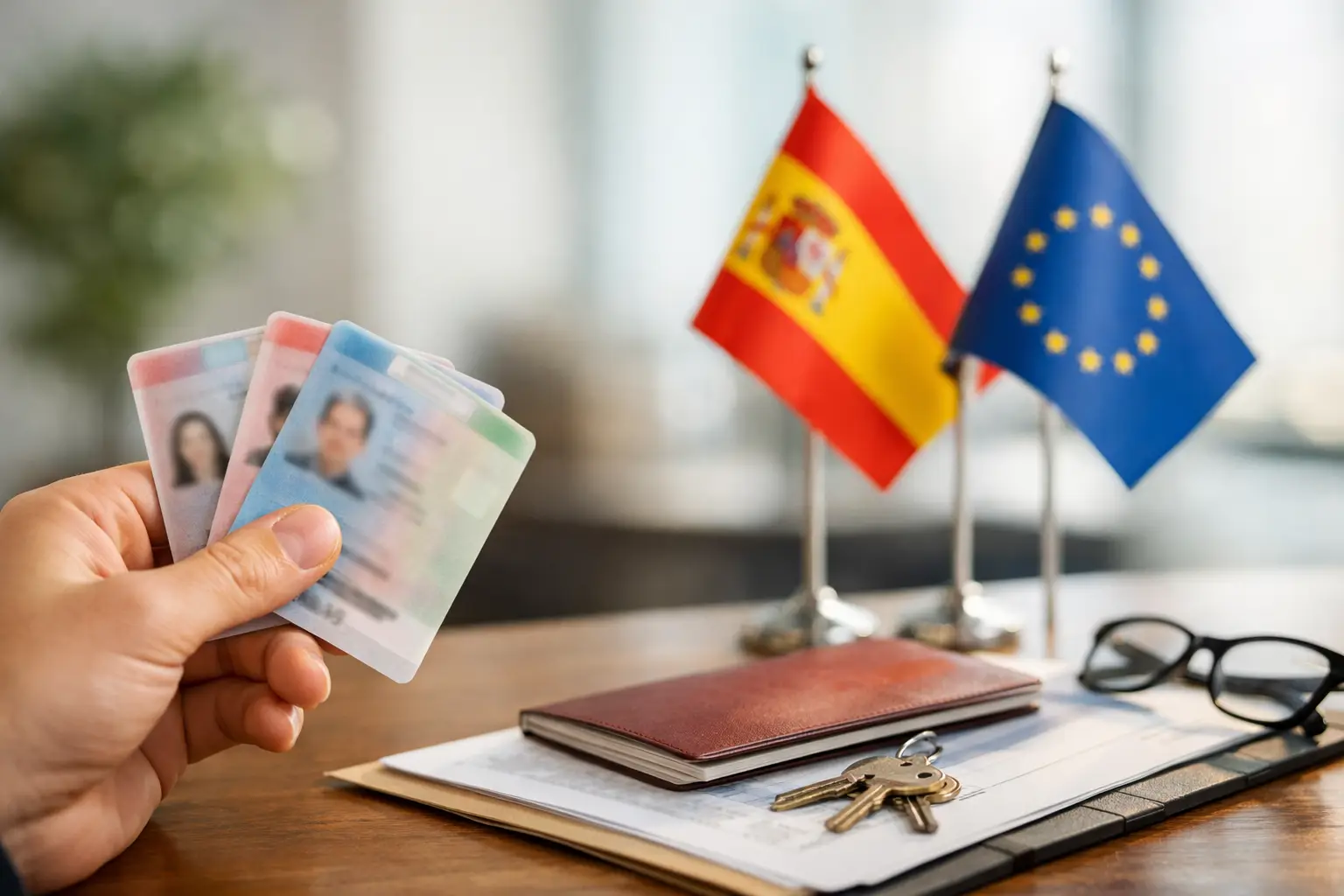
If you search for a residence card Spain process, the first problem is usually vocabulary. People use “residence card” to describe very different documents – a TIE, an EU family card, a residence authorization, or even the registration certificate issued to EU citizens. In Spanish immigration practice, those distinctions matter because the correct route depends on your nationality, your relationship to a Spanish or EU citizen, whether you will work, and whether you are applying from abroad or from within Spain.
That is where many applications start to go wrong. The issue is not only paperwork. It is choosing the right legal category from the beginning and matching your facts to the procedure the immigration office actually expects to see.
What “residence card Spain” usually means
For non-EU nationals, a residence card in Spain often refers to the physical foreigner identity card, known as the TIE – Tarjeta de Identidad de Extranjero. But the TIE is not the same as your underlying immigration authorization. First, the administration grants the residence permit. After that, if your authorization requires it, you attend the police appointment to provide fingerprints and collect the physical card.
That difference sounds technical, but it affects timing and strategy. A person may have legal residence authorization and still be waiting for the TIE appointment. Another person may believe they are applying for a “card” when in fact the real legal question is whether they qualify for family reunification, arraigo, student status, highly qualified professional authorization, or a non-lucrative residence permit.
For EU citizens, the situation is different. They generally do not obtain a TIE simply because they are EU nationals. Instead, they register under the EU regime and receive a registration certificate if they meet the relevant conditions. Their non-EU family members, however, may apply for a residence card under the family member of EU citizen framework.
Which residence card in Spain may apply to your case
The correct path depends less on what you call the document and more on your legal basis for residence.
Non-EU nationals with an independent immigration route
If you are moving to Spain through your own visa or permit, your “residence card Spain” question may relate to one of several categories. Common examples include non-lucrative residence, work authorization, entrepreneur status, highly qualified professional permits, digital nomad permits, student stays that later transition into residence, and arraigo-based regularization for people already in Spain who meet specific legal requirements.
In these cases, the residence card is usually the final physical document that reflects a prior approval. The main legal work lies in preparing the residence application itself, documenting eligibility correctly, and avoiding inconsistencies between your purpose in Spain and the evidence submitted.
Family members of Spanish or EU citizens
If you are the spouse, registered partner, child, dependent ascendant, or other qualifying relative of a Spanish or EU citizen, the relevant route may be the family member residence framework. Here, people often refer broadly to a “residence card,” but the exact regime matters. The legal treatment of relatives of Spanish citizens has evolved significantly, and not every family relationship is handled in the same way.
This area requires particular care with proof of family ties, dependency, cohabitation, and in some cases the sponsoring citizen’s exercise of rights in Spain. A marriage certificate alone is not always enough. The administration may examine whether documents are properly legalized, translated, current, and consistent with the residence history of both parties.
Long-term residents and renewals
Some applicants already hold residence in Spain and are dealing with renewal, modification, or long-term residence. In those cases, the residence card question is often really about continuity of legal stay. Missed deadlines, travel history, criminal background issues, or changes in employment can complicate what should otherwise be a routine renewal.
The same is true for people moving from one immigration category to another. A student who wants to work, a family member whose circumstances changed, or a worker switching employers may all need a modification strategy rather than a simple renewal.
The documents that usually matter most
Spanish immigration procedures are document-driven, but not every document carries equal weight. The file must prove the specific legal basis you are claiming. That sounds obvious, yet many refusals arise because applicants submit a large stack of papers without addressing the legal test clearly.
Identity documents, proof of lawful entry where relevant, evidence of financial means, health insurance, criminal record certificates, family certificates, and local registration may all be part of a case. But the exact combination depends on the category. A digital nomad case raises different issues from a family card application. An arraigo file involves different evidence from a non-lucrative permit.
Spanish authorities also pay close attention to formal validity. Foreign documents may need legalization or apostille, plus sworn translation into Spanish. Dates matter. Expired certificates, inconsistent civil status records, or financial documents that do not match the applicant’s narrative can trigger requests for further evidence or refusals.
Where residence card Spain applications usually become complicated
The law is one part of the problem. Administrative practice is the other. A case may be legally viable but still run into procedural friction if it is presented under the wrong route or at the wrong stage.
Confusing NIE, TIE, and residence authorization
Many foreign nationals already have an NIE and assume that means they have residence rights. It does not. The NIE is only an identification number for foreigners. It can appear in many contexts, including tax and property matters, without granting residence authorization.
The TIE, on the other hand, is a physical identity card issued to certain non-EU nationals who already have the required authorization. Mixing these concepts can lead applicants to focus on the police card appointment when the real issue is whether immigration approval exists at all.
Applying under the wrong legal regime
Family cases are especially sensitive here. The route for a non-EU spouse of an EU citizen is not identical to other residence procedures. The route for a relative of a Spanish citizen may require a different legal analysis from the route for a relative of a non-Spanish EU citizen. Small factual differences can change the entire application strategy.
This is also true for workers and founders. Someone may assume a standard work permit is the right answer when, depending on the company structure or qualifications, another framework would fit better.
Prior refusals or status problems
A previous visa refusal does not always block a new application, but it cannot be ignored. The same applies to periods of irregular stay, criminal record concerns, or family documents that were not accepted previously. These cases often need a more careful legal presentation from the outset, and in some matters appeals or reconsideration filings may become part of the strategy.
What to expect after approval
Once the residence authorization is granted, the next step may be the TIE process if your category requires a physical card. That usually involves paying the applicable fee, scheduling the fingerprint appointment, and later collecting the card. If the applicant is abroad, consular steps may come first depending on the route used.
Approval is not the end of compliance. Your permit conditions still matter. Some authorizations are tied to employment, some depend on continuing family circumstances, and some require attention to renewal windows. If your situation changes – divorce, job loss, remote work structure, business activity, or prolonged absence from Spain – the effect on residence status should be reviewed early rather than after a problem appears.
When legal guidance adds real value
Not every immigration matter is contentious, but many are unforgiving. Spain’s system uses formal categories, documentary rules, and procedural deadlines that leave little room for guesswork. That is especially true for cases involving family dependency, status regularization, modifications between categories, prior refusals, or mixed cross-border issues such as tax residence, company incorporation, or recognition of foreign qualifications.
For clients dealing with relocation, family unity, work authorization, or long-term settlement, the goal is not just to submit forms. It is to build the correct legal route from the start, anticipate the objections an officer may raise, and keep the process aligned with the person’s broader immigration plan in Spain. That is the difference between chasing a “card” and securing the right status behind it.
If your case feels confusing, that usually means the terminology is hiding a more important legal question. The useful next step is to identify exactly which residence framework applies to your facts, because once that is clear, the rest of the process becomes far more manageable.

Francisco Campos Notario, Lawyer ICAS 15702 and specialist in Immigration Law, offers updated content in Lexmovea. Find valuable information about immigration, residency and nationality procedures. For personalized consultations, contact us or visit our offices in Madrid and Seville.