
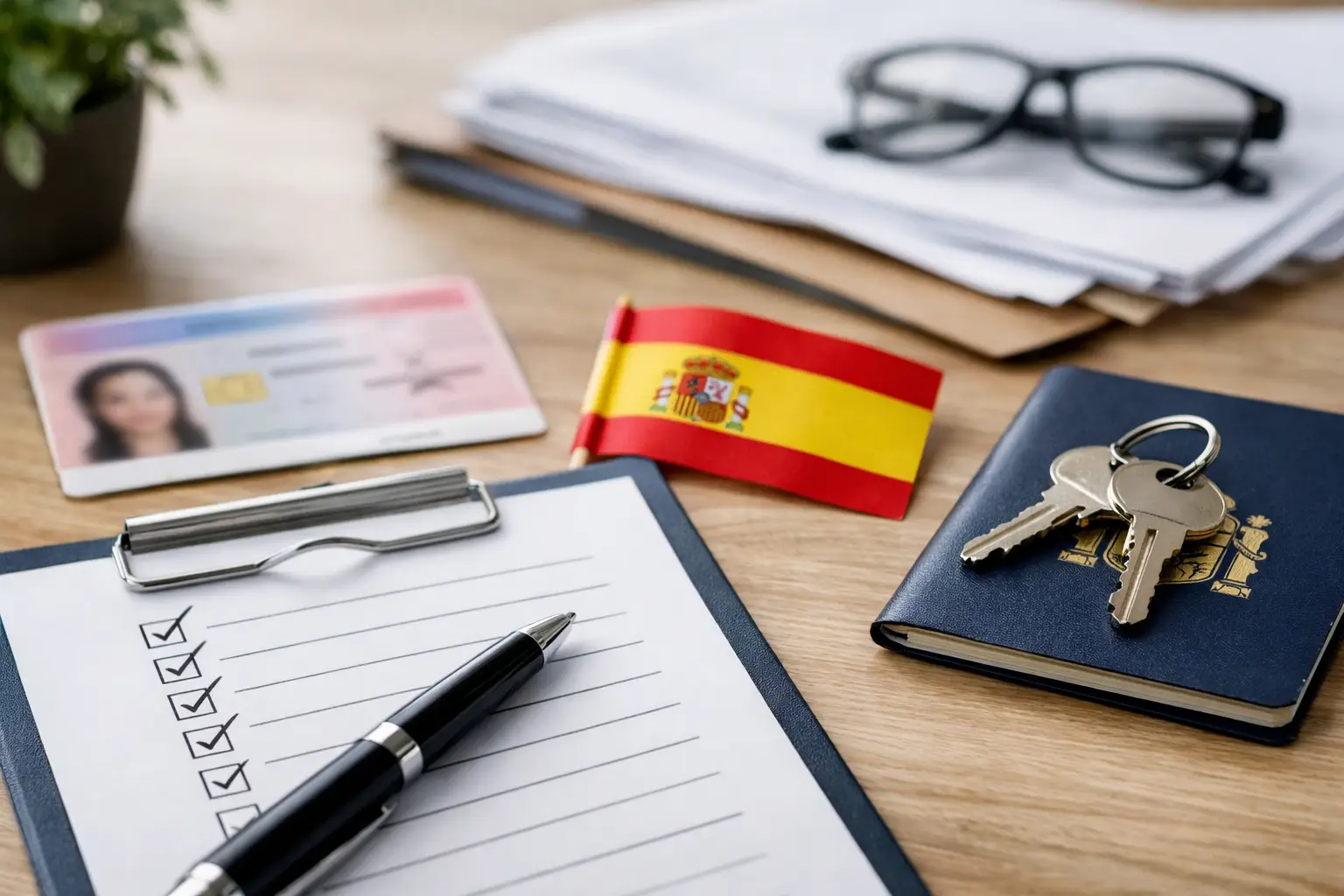
If your residence card is close to expiring, the question is rarely just whether you can renew. The real issue is whether your TIE renewal Spain documents match the authorization you hold, the stage of your file, and the office handling it. That is where many renewals slow down – not because the person is ineligible, but because the paperwork does not fully support the legal basis for renewal.
In Spain, the TIE is the physical foreigner identity card, but the renewal process usually begins with renewing the underlying residence authorization. That distinction matters. Many applicants focus on the card appointment and fingerprints, when the more important step is proving that their right to remain in Spain continues under the applicable immigration rules.
What TIE renewal Spain documents usually include
The exact file depends on whether you are renewing as a student, employee, self-employed worker, family member, or holder of another residence category. Even so, some documents appear again and again across cases.
You will usually need a valid passport, a copy of your current TIE, the official application form for the relevant renewal procedure, and proof that you continue to meet the conditions of your residence permit. Depending on the process, that proof may include an employment contract, Social Security registration history, proof of enrollment, evidence of sufficient funds, private or public health coverage, or family relationship documents.
Once the authorization is renewed, the card issuance phase often requires the favorable resolution, the EX-17 form, proof of fee payment, passport photos meeting Spanish police requirements, your passport, and your prior TIE. Applicants sometimes assume the same set of papers is used for both phases, but that is not always the case.
First question: are you renewing the authorization, the card, or both?
This is one of the most common points of confusion. If your residence authorization is about to expire, the legal renewal must generally be filed first. Only after approval do you attend the police appointment to request the new TIE card.
If your authorization is still valid but the card was lost, damaged, or expired physically, the issue may be a duplicate or replacement rather than a substantive renewal. The required documents are different. Filing the wrong procedure can waste valuable time, especially when travel, work continuity, or family applications depend on valid documentation.
Why the distinction matters
Spanish immigration offices and police stations do not review the same things. The immigration office evaluates whether you still qualify for residence. The police station handles identity verification, fingerprints, and card production. A file can be approved at one stage and still stall at the next if the supporting documents are incomplete or inconsistent.
Documents that change by residence type
This is where generic checklists often become unreliable. The right TIE renewal Spain documents depend on the legal category of stay.
Work permit renewals
For employed workers, the file often turns on labor continuity, Social Security contributions, and whether the renewal qualifies despite changes in employment. Some applicants can renew after job changes, periods of unemployment, or a modified employment situation, but only if the documentation fits the legal pathway available. That may require contribution records, job search registration, new contracts, or evidence of family and economic circumstances.
For self-employed applicants, the administration may look more closely at business continuity, tax compliance, Social Security self-employment registration, and proof that the activity remains genuine. A renewal can become more technical when income fluctuates or the structure of the business has changed.
Student stay renewals
Students are often asked for proof of continued enrollment, academic progress, financial means, and health insurance. In practice, academic documentation matters more than many expect. If there has been a program change, interruption, or transfer, the file may need a more careful legal explanation rather than just an updated admission letter.
Family member and family reunification renewals
For family-based residence, authorities may request evidence that the family relationship still exists and, depending on the category, proof of housing, income, cohabitation, or the sponsor’s continued legal residence. Renewals involving marriage, registered partnership, dependent children, or ascendants can become fact-sensitive if the family structure has changed since the original approval.
Non-lucrative and other residence categories
For non-lucrative residence, financial means and health insurance remain central. The issue is not just having documents, but showing they meet current standards and are consistent across the file. Bank certificates, policy documents, and proof of residence in Spain should align with the renewal period and the applicant’s actual circumstances.
Common document problems that cause delays
Many renewal issues are procedural rather than substantive. A person may qualify, but the file does not make that clear to the administration.
Expired passports are an obvious problem, but partial passport validity can also complicate things. A renewal filed with a passport that is technically valid but close to expiration can create avoidable friction later, especially when the card issuance stage approaches.
Translations and legalization are another recurring issue. Not every renewal requires foreign documents, but when it does, the formal validity of those documents matters. A birth certificate, marriage certificate, or criminal record document that was acceptable in a prior stage may not automatically satisfy a later procedure if it is outdated, missing legalization, or not translated by an authorized sworn translator where required.
Administrative consistency also matters. Names, passport numbers, addresses, and civil status must match across forms and supporting records. Small discrepancies can trigger a request for correction. In immigration practice, even minor inconsistencies can become expensive in time.
Timing matters as much as the documents
A strong file filed late can still create legal stress. In Spain, many renewals can be submitted within a defined period before expiration and also during a limited period after expiration, though filing after the card expiry date is rarely ideal. Lawful filing windows vary by procedure, and missing the proper timing can affect work rights, travel planning, and access to appointments.
This is especially important for applicants who plan to travel outside Spain while a renewal is pending. The legal status of the renewal, the expiration date of the current card, and the need for return authorization all need to be assessed together. People often focus only on the appointment date, when the more urgent issue is whether they can re-enter Spain without problems.
What happens after approval
After the underlying authorization is granted, the police appointment for fingerprints is not just a formality. You will generally need the approval resolution, passport, EX-17, recent photos, proof of fee payment, and the expiring or expired TIE. Some police offices apply appointment and document review practices very strictly, so a technically approved case can still require a repeat visit if the card-stage paperwork is incomplete.
Biometric collection is followed by the card pickup stage. Keep copies of everything submitted and review the card once issued. Errors in identity details, validity dates, or category labels should be corrected promptly.
When a renewal needs more than a checklist
Not every case can be handled with a simple standard packet. If you changed employers, spent significant time outside Spain, interrupted studies, separated from a sponsoring family member, or moved from one immigration category to another, the renewal may require legal framing rather than just document gathering.
That is also true when the administration issues a request for additional documentation or a proposed denial. At that point, the quality of the response matters. A renewal is not only about sending papers – it is about proving legal continuity under the correct rule and with evidence that addresses the exact concern raised by the file.
For applicants dealing with tight deadlines, family dependents, or business-related residence issues, that analysis can make the difference between a straightforward approval path and a preventable setback. Lexmovea regularly assists with Spanish immigration renewals where the challenge is not the existence of documents, but whether they support the right legal argument.
The safest approach is to treat your renewal as a legal file, not an administrative errand. When your documents are aligned with your residence category, your timeline, and your actual circumstances in Spain, the process becomes far more manageable.

Francisco Campos Notario, Lawyer ICAS 15702 and specialist in Immigration Law, offers updated content in Lexmovea. Find valuable information about immigration, residency and nationality procedures. For personalized consultations, contact us or visit our offices in Madrid and Seville.