
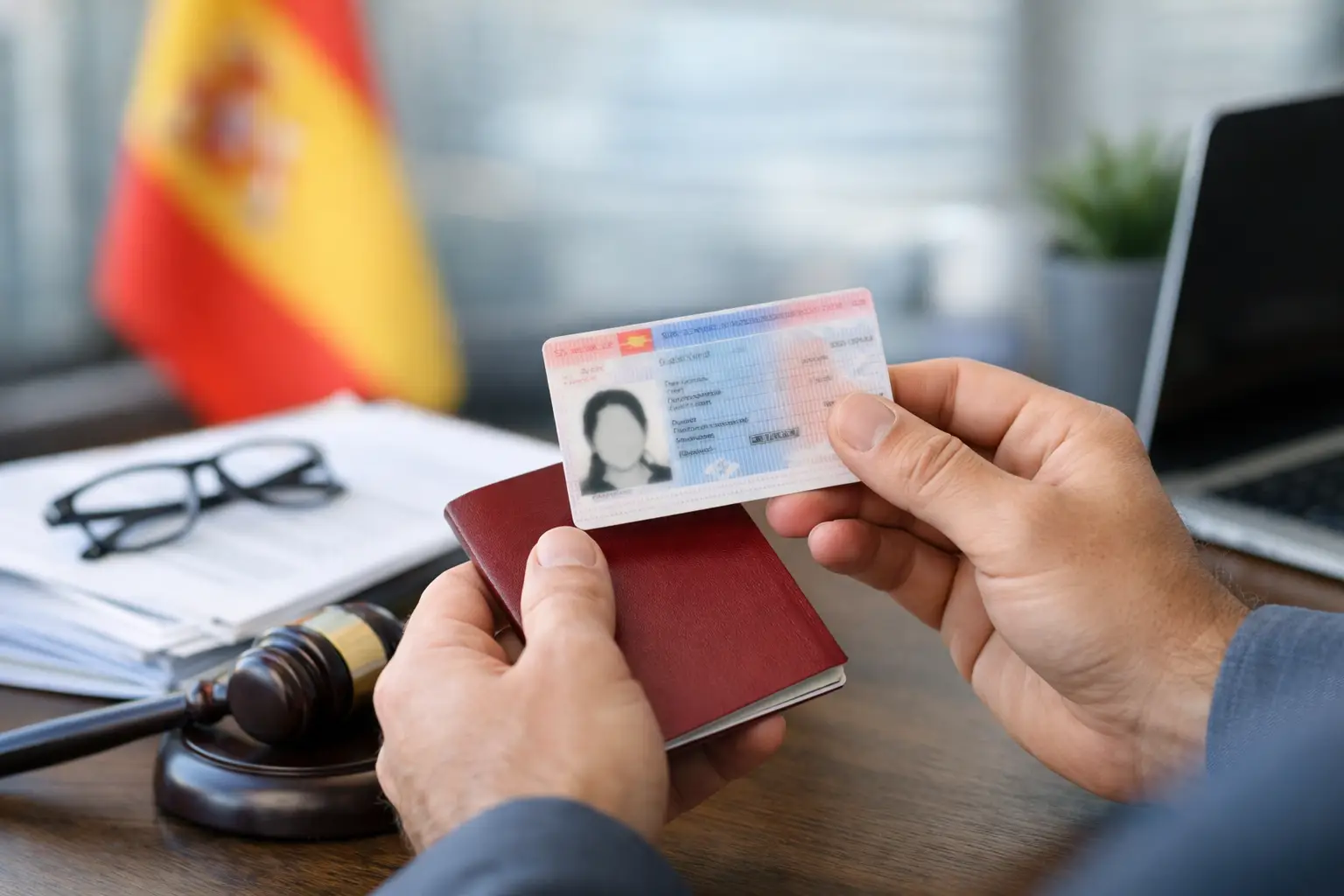
A renewal application can look complete when it is submitted and still run into a serious administrative problem weeks later. Knowing how to fix Spanish residency renewal errors starts with identifying what stage the case is in: a pending application with a document request, an unfavorable decision, or an approved authorization followed by a TIE issue. Each situation has a different legal response, and acting under the wrong procedure can make a correctable issue harder to resolve.
First, identify the type of renewal error
Spanish immigration renewals are reviewed against the requirements for the specific residence authorization. A renewal of a non-lucrative residence authorization is not assessed in the same way as a work and residence permit, a digital nomad authorization, a student stay extension, or a tarjeta comunitaria. The first step is therefore to review the exact authorization being renewed, the filing receipt, and every notification issued by the relevant Oficina de Extranjería.
Some errors arise before the application is filed. An expired passport, an outdated address, missing apostilles, incomplete translations, or a document uploaded under the wrong category can create problems from the outset. Others emerge during the review, such as insufficient proof of financial means, gaps in Social Security contributions, questions about employment continuity, excessive absences from Spain, or a criminal record certificate that does not meet the applicable requirements.
A technical filing error is often fixable. A substantive eligibility issue may require a more detailed legal strategy, additional evidence, or consideration of another immigration route. Treating both problems as if they were the same is a common and costly mistake.
Check whether there is a requerimiento
A requerimiento is a formal request from the administration to correct, clarify, or provide missing documentation. It is not automatically a refusal. In many cases, it is the clearest opportunity to resolve a deficiency while the renewal remains under review.
The notice will identify the documents or explanations requested and set a deadline. Although a 10-business-day response period is common, the deadline stated in the notification controls. Do not assume that an extension is available or that a document sent by email will be considered properly filed. Responses generally need to be submitted through the appropriate electronic administrative channel, with proof of filing preserved.
Electronic notifications require particular attention. If an applicant is required to receive notifications electronically, failing to access the notice does not necessarily prevent it from taking effect. A notification made available electronically can be treated as rejected after the legally applicable period has passed. This is why monitoring the relevant electronic notification channels is part of protecting a pending renewal.
Respond to the actual issue, not just the document request
A strong response does more than attach papers. It addresses the concern behind the requerimiento. For example, if an immigration office questions whether a work permit holder meets the employment or contribution requirements, a response may need to organize employment contracts, payroll records, Social Security history, employer documents, and a legal explanation of how the evidence satisfies the renewal rules.
Likewise, if a non-lucrative residence renewal raises questions about financial resources, bank statements alone may be insufficient if the source, ownership, availability, or continuity of the funds is unclear. The documentation should be internally consistent and aligned with the legal standard for that authorization.
Common Spanish residency renewal errors and their solutions
The most frequent problems are not always dramatic. They are often small inconsistencies that become significant because Spanish immigration procedures are document-driven.
An expired or soon-to-expire passport can affect the validity of a renewal. If the passport renewal is already underway, evidence of the application, consular appointments, and any available provisional documentation may be relevant. The appropriate response depends on the facts and on what the immigration office has specifically requested.
For employees and self-employed applicants, Social Security records deserve careful review. A gap in contributions does not always mean renewal is impossible, but it may need an explanation based on the applicant’s work history, protected periods, family circumstances, business activity, or other applicable legal provisions. Submitting a bare work history report without context can leave the central question unanswered.
Insurance is another recurring issue, especially for non-lucrative residents, students, and certain family members. Policies may be rejected when coverage is limited, excludes ordinary medical care, includes substantial copayments, begins after the relevant date, or does not clearly cover Spain. The policy certificate should be reviewed against the requirements of the residence category rather than assumed adequate because it is private insurance.
Proof of address can also create avoidable delays. A padrón certificate, rental agreement, property deed, or utility record may be requested for different purposes, but they are not interchangeable in every case. If household circumstances have changed, the renewal file should explain the change clearly and consistently.
Absences from Spain require equally careful analysis. The permitted absence rules vary by residence category and can affect both renewal and future long-term residence or nationality planning. Travel records, passport stamps, and explanations should be assessed before responding, particularly where the applicant has spent significant periods abroad for work, family, or health reasons.
How to fix a Spanish residency renewal error after a refusal
A refusal, or resolución denegatoria, changes the procedural landscape. The decision should be read line by line, including its legal grounds, factual reasoning, notification date, and the appeal information at the end. The administration may deny a case for a missing requirement, a perceived inconsistency, late filing, insufficient evidence, or an incorrect interpretation of the applicant’s circumstances.
The correct response may be a reconsideration appeal, known as a recurso potestativo de reposición, an administrative appeal of another type, or a judicial challenge before the contentious-administrative courts. The available remedy depends on the authority that issued the decision and the wording of the notification. Appeal deadlines are strict and should be calculated from the legally effective notification date, not from the day an applicant happens to read the decision.
An appeal is not simply an opportunity to resubmit the same application. It should identify errors in the decision, explain the applicable legal rules, and present evidence that directly addresses the grounds for refusal. In some circumstances, a new application may be preferable to an appeal. In others, refiling could create status, timing, or admissibility concerns. That judgment depends on the authorization, the applicant’s current legal position, and the strength of the available evidence.
Do not confuse residence authorization with the TIE card
A Spanish residency renewal involves two related but distinct matters: the immigration authorization and the physical TIE card. An approved renewal does not mean the process is fully complete. The holder will normally need to obtain a new TIE within the applicable period, including the required appointment, fee payment, photographs, passport, approval resolution, and other documentation requested at the police station.
Conversely, an expired TIE does not always mean the underlying residence authorization has expired. If a timely renewal is pending, the filing receipt and relevant proof of legal status may be essential while waiting for a decision. A lost, stolen, damaged, or incorrect TIE usually calls for a separate card procedure rather than a new residence renewal.
Protect your position while the error is being resolved
Timing matters in every renewal case. Many Spanish residence renewals can be filed during the 60 days before expiration and, in certain cases, within 90 days after expiration. A late filing can carry consequences, even where renewal remains possible. The applicable rule and the effect on work rights, travel, family members, and future applications should be assessed individually.
Keep a complete record of every filing receipt, notification, payment confirmation, appointment record, and document submitted. If a correction is made, preserve proof that it was filed within the deadline and through the proper channel. Where travel is unavoidable during a pending renewal, obtaining case-specific advice before departure is prudent, since re-entry documentation and practical border issues can vary.
Renewal errors are often manageable when they are identified early and addressed with the correct procedural tool. Lexmovea can review the decision, requerimiento, or pending file, organize the necessary evidence, and determine whether a correction, appeal, or alternative immigration strategy best protects your residence in Spain.

Francisco Campos Notario, Lawyer ICAS 15702 and specialist in Immigration Law, offers updated content in Lexmovea. Find valuable information about immigration, residency and nationality procedures. For personalized consultations, contact us or visit our offices in Madrid and Seville.